

You sit down in the barber chair and say, “Just a low fade.” The barber nods, but what you picture and what you get may not match. Many people use “taper” and “fade” as if they mean the same thing. They do not.
A low taper and a low fade both keep the sides short near the ears and neckline. The difference is how much hair is removed and how clean the finish looks. This guide explains both cuts in plain language, so you can pick the right one and ask for it with confidence.
The main difference in Low taper vs low fade
A low taper shortens the hair gradually around the sideburns and nape, but it leaves visible hair length. A low fade blends the hair much shorter, often down to the skin, so the sides seem to disappear into the neckline.
In short:
- Low taper: subtle, neat, and classic.
- Low fade: sharper, more contrasted, and more modern.
Both start low, near the ear and the base of the head. That shared starting point is why people mix them up.
What is a low taper?
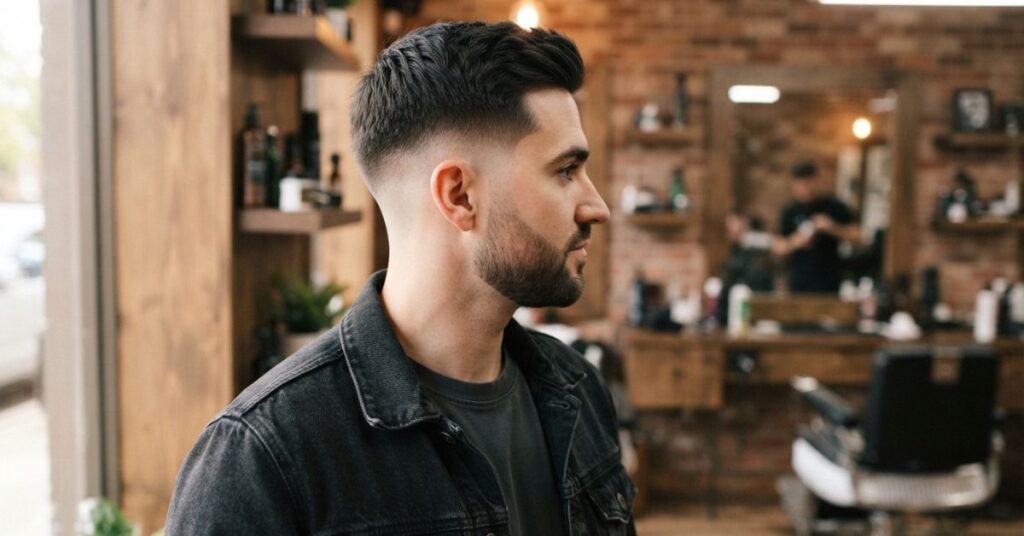
A low taper is a haircut where the hair gets gradually shorter toward the sideburns and the back of the neck. It follows the natural hairline, so the result looks tidy without a dramatic change.
How a low taper is cut
Most barbers use clipper guards or a clipper over comb technique. The length steps down in small stages, usually ending around a #1 to #2 guard at the very bottom. The hair at the bottom is short, but it is rarely bald.
Key traits of a low taper
- Keeps some length on the sides, even at the lowest point.
- Cleans up the sideburns, ears, and neckline only.
- Produces a soft, gradual transition.
- Works in most offices and formal settings.
Think of it as a polished version of a regular haircut. It looks like you just got a fresh trim, not a statement style.
What is a low fade?
A low fade is a haircut where the sides blend from longer hair on top down to very short hair or bare skin at the bottom. The fade begins low, just above the ear, and wraps around the back in an arc.
How a low fade is cut
The barber works upward from the neckline with progressively longer guards, blending each section into the next. The bottom often reaches a #0, a foil shaver, or bare skin. That is why you may hear the terms “skin fade” or “bald fade.”
Key traits of a low fade
- Creates a clear contrast between the top and the sides.
- Shows more skin around the ears and nape.
- Looks crisp and sharp when fresh.
- Can be customized as a straight, curved, or drop fade.
A drop fade curves down behind the ear. A burst fade flares around the ear in a semicircle. Both are low fade variations you can ask for by name.
Low taper vs low fade at a glance
| Feature | Low Taper | Low Fade |
|---|---|---|
| Starting point | Low, near the ear and nape | Low, just above the ear |
| Shortest length | Short but not bald (about #1 to #2) | Very short or skin (#0 or bare) |
| Contrast | Soft | Strong |
| Skin shown | Little to none | Often some to a lot |
| Look | Classic, conservative | Modern, sharp |
| Barber visit | Every 3 to 4 weeks | Every 2 to 3 weeks |
| Grow-out | Gentle and natural | Quickly visible |
Use this table as a quick reference before your next appointment.
Which one looks more natural, and where each works best
The low taper looks more natural. Because it keeps length around the ears and neck, nobody can tell exactly when you got your last cut. It simply looks neat.
The low fade looks more deliberate. The contrast catches the eye, which is the point. It suits people who want their haircut to be noticed.
Where a low taper works best
- Corporate and conservative workplaces.
- Weddings, interviews, and formal events.
- Anyone growing out a longer style who wants tidy edges.
- Men with a naturally receding hairline who want a soft finish.
Where a low fade works best
- Creative or casual workplaces.
- Social settings and everyday streetwear looks.
- Athletes and active people who like a clean, light feel.
- Anyone who wants a strong, sharp outline.
Choosing based on your face shape
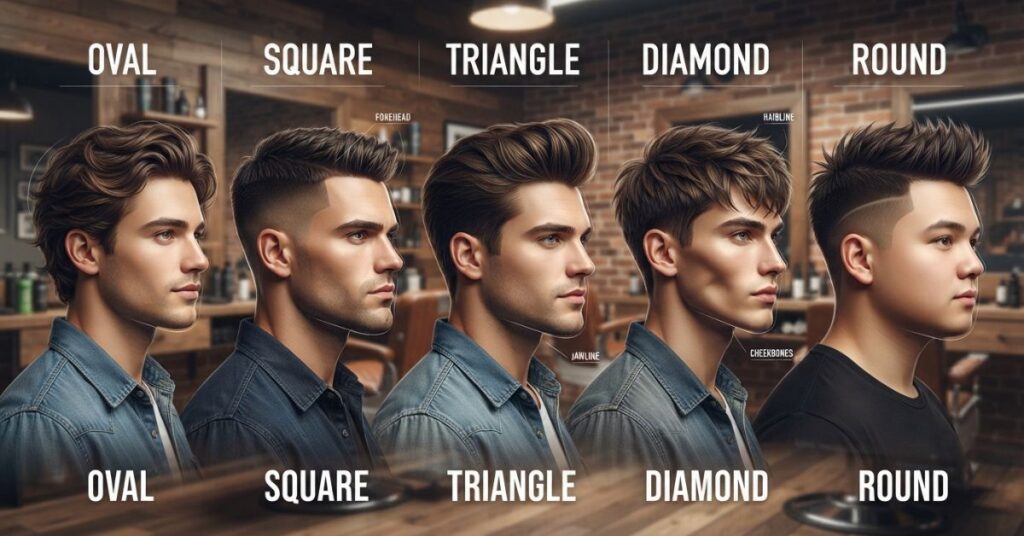
Your face shape does not decide everything, but it helps. The goal is balance. Here is a simple guide.
Oval face
Both cuts work. You can pick based on the vibe you want.
Round face
A low fade can add definition and make the face look slightly longer when paired with height on top. A low taper also works if you keep the sides snug and the top textured.
Square face
A low taper softens a strong jaw, which many people like. A low fade keeps the angular look and makes it bolder.
Oblong or long face
Avoid too much height on top. A low taper with moderate volume keeps proportions even. A low fade works if the top stays short and flat.
Diamond or heart-shaped face
A low taper keeps the sides from looking too narrow. A low fade can work if the top has some texture to balance the forehead.
Remember that your hairline, head shape, and ear position matter too. Treat face shape as a starting point, then let your barber adjust.
Choosing based on your hair type
Hair texture changes how each cut behaves. This is the part many guides skip.
Straight hair
Both cuts blend easily. A low fade shows clean lines, but straight hair can reveal patchiness if the blend is rushed. A low taper is more forgiving.
Wavy hair
A low taper keeps the sides in step with the natural wave on top. A low fade adds crisp contrast that lets waves stand out.
Curly hair
A low fade makes curls on top look fuller by contrast. A low taper gives a softer, more natural frame. Ask for the top to be left longer so curls can form.
Coily or Afro-textured hair
Both are excellent. A low fade gives a bold, defined shape and pairs well with a line-up. A low taper is a good choice if you prefer a gentler edge and slower grow-out. Coily hair holds a fade clearly, so expect sharp results.
Thin or thinning hair
A low taper is often kinder. A skin-level fade can make thin areas around the temples stand out. If you have a receding hairline, ask your barber to keep the temple area a touch longer.
Maintenance and how long each lasts
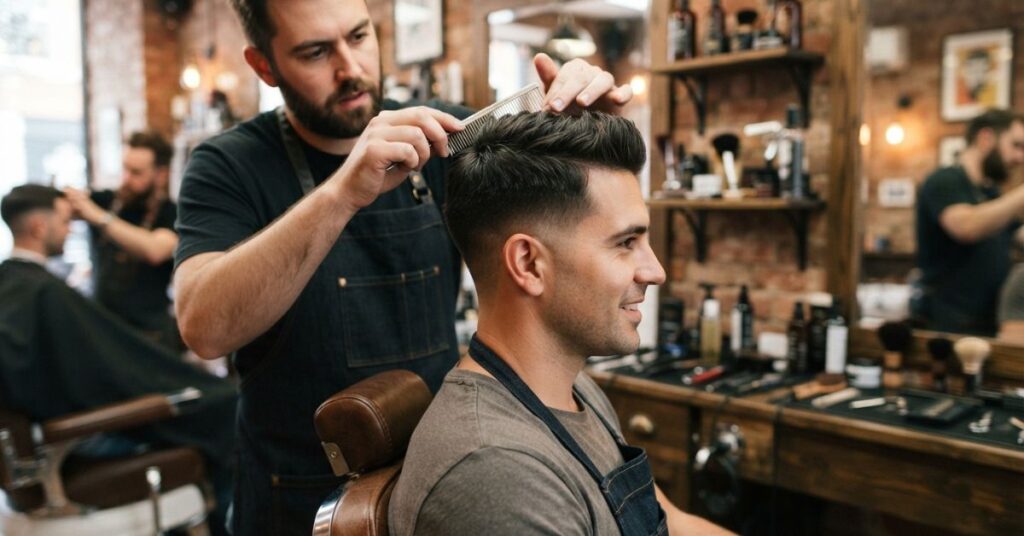
A low taper lasts longer than a low fade. A low fade shows regrowth faster because the contrast disappears as the bare skin fills in.
Low taper maintenance
- Visit your barber every 3 to 4 weeks.
- Clean the neckline at home with a trimmer if needed.
- Grow-out looks natural, so you can stretch visits when busy.
Low fade maintenance
- Visit your barber every 2 to 3 weeks to keep the blend sharp.
- Expect noticeable fuzz at the nape after 10 to 14 days.
- Budget for more frequent trips if you like skin-level finishes.
Daily care tips for both
- Wash your hair regularly and moisturize the scalp.
- Use a small amount of product on top, not the sides.
- Pat dry instead of rubbing hard, especially with curls.
- Apply sunscreen on exposed skin after a fresh fade.
If you want a cut that saves time and money, the low taper wins.
Pairing with popular styles on top
The sides are only half of the haircut. The top decides the overall look.
Styles that suit a low taper
- Classic side part: clean and professional.
- Textured crop: casual yet tidy.
- Slick back: works well with a soft taper.
- Longer curls or waves: the taper keeps edges neat.
Styles that suit a low fade
- Quiff or pompadour: strong volume with high contrast.
- French crop: short top with a sharp edge.
- Curly top with a fade: popular and eye-catching.
- Buzz cut with a fade: minimal and bold.
- Waves and twists: the fade makes the pattern pop.
Match the top to your daily routine. If you only have two minutes in the morning, choose a style that needs little product.
How to ask your barber
Barbers differ on what “fade” and “taper” mean, so be specific. Photos help more than words.
Try this script:
- “I would like a low taper” or “I would like a low fade.”
- Say how short you want the bottom: “to a #1,” “to a #0,” or “down to skin.”
- State the length on top, such as “leave about 3 inches.”
- Mention the neckline: “natural,” “squared,” or “rounded.”
- Add extras if needed: “drop the fade behind the ear” or “keep the temples soft.”
Common mistakes to avoid
- Saying only “short on the sides” without a length.
- Forgetting to mention how you style the top.
- Asking for a skin fade when you want a soft, natural finish.
- Skipping a reference photo.
A good barber will ask follow-up questions. That is a sign they care about getting it right.
So, which should you choose?
Pick the low taper if you want:
- A clean, classic, and subtle look.
- Fewer barber visits.
- A natural grow-out.
- A safe choice for professional settings.
Pick the low fade if you want:
- A bold, sharp, high-contrast style.
- A modern look that stands out.
- Crisp lines that suit short or textured tops.
- To commit to more frequent maintenance.
Still unsure? Start with a low taper. It is easier to go shorter next time than to grow hair back. If you love the tidy feel and want more edge, upgrade to a low fade at your next visit.
FAQs about low taper vs low fade
Is a low taper the same as a low fade?
No. A low taper shortens hair gradually and keeps some length, while a low fade blends down to very short hair or skin.
Which lasts longer, a low taper or a low fade?
A low taper lasts longer, usually 3 to 4 weeks, because its soft transition grows out gently.
Is a low fade more professional than a low taper?
Not usually. A low taper is the more conservative choice, though a clean low fade is fine in most modern workplaces.
Which is better for curly or coily hair?
Both work well. A low fade adds bold definition, while a low taper offers a softer frame and slower grow-out.
Can I get a low fade with long hair on top?
Yes. A low fade pairs well with long tops, such as quiffs, curls, and slick backs.
What should I say to my barber to get a low taper?
Ask for “a low taper with a #1 or #2 at the bottom, natural neckline, and length on top.” Bring a reference photo.
Which is better for a receding hairline?
A low taper is usually gentler, since it avoids skin-level contrast around the temples.
How much does a low taper or low fade cost?
Prices vary by barber and city, but both usually cost about the same. A fade may cost more over time because of more frequent visits.
Conclusion
The low taper and the low fade share the same low starting point, but they deliver different results. A low taper is soft, classic, and easy to maintain. A low fade is sharp, modern, and needs regular upkeep.
Think about your hair type, face shape, workplace, and how often you can visit a barber. Then bring a photo and use clear terms. With those details, you will leave the chair with the cut you imagined.

