

A low taper fade fringe is a haircut with short, neatly blended sides and a longer front section that falls over the forehead. It is clean around the ears and neck and relaxed on top. That mix makes it one of the easiest modern cuts to wear to the office, the gym or a night out.
This guide covers what to ask for, which fringe suits your face, how long your hair should be, what it costs and how to keep it sharp. Each of the 20 styles below includes a photo brief so you can find matching reference images for your barber.
What is a low taper fade fringe?
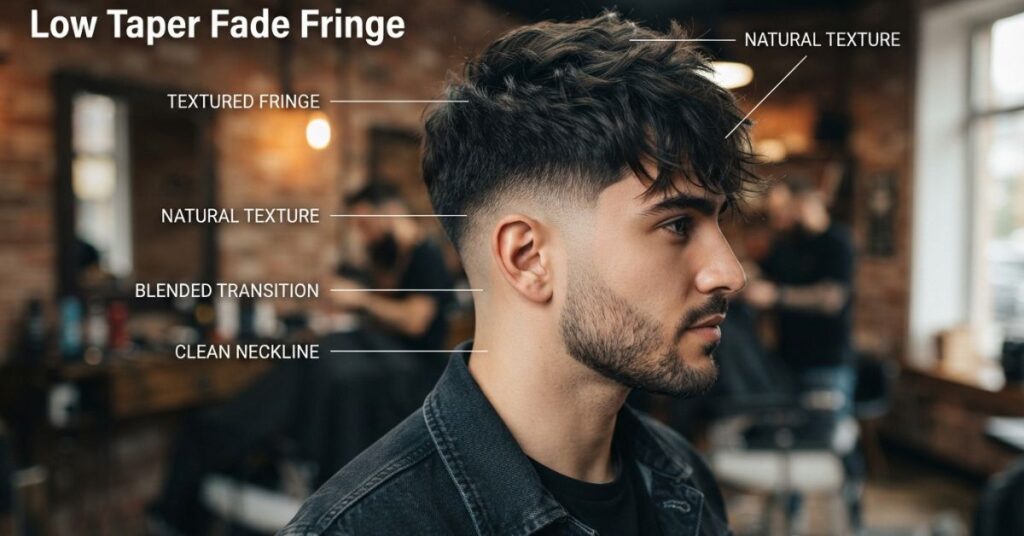
A low taper fade fringe combines a low taper on the sides and back with a longer fringe on top. The taper starts close to the hairline, around the sideburns and the nape. The hair there gets shorter gradually, often down to a #0 to #1 clipper length or a skin finish at the very edge. Everything above that stays longer.
Think of it as three parts:
- Low: the shortest hair sits near the ears and neckline, not high on the temple.
- Taper fade: the length shortens in a smooth, even gradient rather than a sharp contrast.
- Fringe: the front hair is cut to fall forward over the forehead, usually with texture.
The result looks neat without looking severe. Barbers often describe the low taper as the “universal” option because it suits most hair types and professional settings.
What it looks like from the front, side, and back
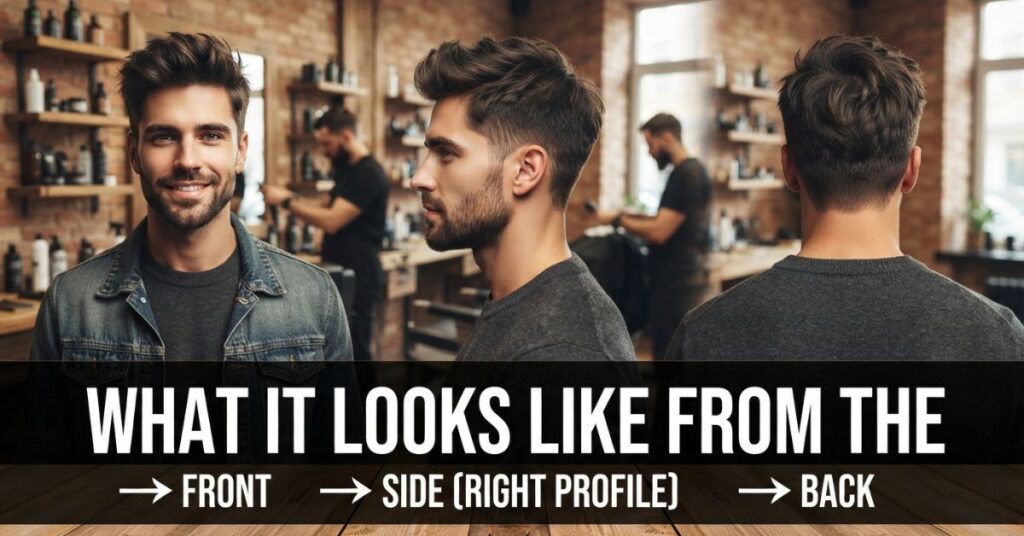
Front: The fringe is the focus. It sits anywhere from just above the brows to over them, either blunt or broken up with texture. The sideburns are cleanly tapered.
Side: The hair around and above the ear is short, then grows longer as it climbs toward the crown. A low taper keeps the gradient close to the ear, so the sides still look like hair rather than bare skin.
Back: The nape is tapered with either a natural neckline or a squared or rounded edge. The back blends upward into the longer top. A clean neckline is what makes the cut look fresh for weeks.
How it compares to similar cuts
Many people mix these terms up, so here is a quick comparison.
| Cut | Where the short hair starts | Contrast | Upkeep |
|---|---|---|---|
| Low taper fringe | Around ears and nape | Soft | Lower |
| Low skin fade fringe | Low, but to bare skin | Sharp | Higher |
| Mid taper fringe | Mid-side of the head | Medium | Medium |
| High taper fringe | Near the temple | Strong | Higher |
| Classic scissor cut | Whole head, no clipper fade | Minimal | Lowest |
The key difference between a taper and a fade is evenness. A taper is gradual and consistent. A fade can drop more abruptly, often down to the skin. Many barbers use “taper fade” to mean a taper, so bring a photo to avoid a mismatch.
Who does it suit?
The low taper fade fringe works for most men and many women who like short sides. It is especially good for:
- Office workers and students who need a polished but modern look.
- Men with straight, wavy or curly hair. Curls get a defined, textured fringe.
- Anyone growing out a buzz cut or skin fade who wants a gentler transition.
- Men with a prominent forehead or a slightly receding front hairline, since a fringe adds coverage.
It is less ideal if you have a very low hairline at the front or a strong cowlick at the crown. A skilled barber can work around both, but you will need to be flexible on fringe length.
Best fringe for your face shape
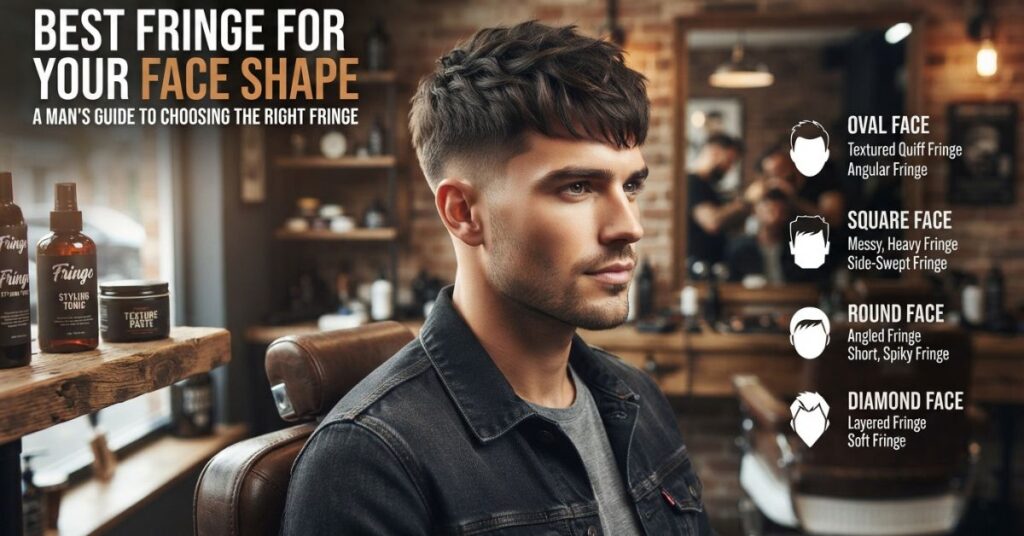
Your face shape should guide the fringe length and direction.
- Oval: Almost anything works. A textured, side-swept fringe is a safe pick.
- Round: Choose a longer, angular fringe and a bit of height. Avoid a heavy blunt line across the forehead.
- Square: Soft, broken-up texture and a slight side sweep reduce the strong jaw angles.
- Oblong or long: A straight-across or shorter fringe visually shortens the face. Keep the top from getting too tall.
- Heart: A side-swept or curtain fringe balances a wider forehead and narrow chin.
- Diamond: A textured fringe with some forward movement softens the cheekbones.
20 best low taper fade fringe styles
Each style below has a photo brief so you can search for or shoot a matching image.
Short and textured
- Textured crop fringe. A short, choppy fringe about 1 to 2 inches long that sits just above the brow. Photo brief: front view, matte finish, dark hair.
- Messy fringe. Loose, separated pieces with a deliberately undone finish. Photo brief: three-quarter angle, daylight.
- Spiky fringe. Short top pushed forward with clay and cut into points. Photo brief: close-up of the fringe tips.
- Choppy crop with low taper. Point-cut ends for a lived-in look. Photo brief: top-down view showing the texture.
Classic and clean
- Side-swept fringe. A neat sweep from a natural or defined part. Photo brief: side profile, subtle shine.
- French crop. Short, blunt, cropped across the forehead with a low taper. Photo brief: front view, straight hair.
- Caesar fringe. A short, horizontal fringe on a slightly longer top. Photo brief: front and side for contrast.
- Comb over fringe. A tidy side part with a forward-leaning front. Photo brief: office-ready styling.
Longer and softer
- Curtain fringe. A center part with the front falling to each side. Photo brief: front view, medium hair.
- Long messy fringe. 3 to 4 inches on top, falling toward the eyebrows. Photo brief: movement shot, light wind.
- Swept-back fringe. The front pushed up and back for a clean forehead. Photo brief: profile showing the taper.
- Flowy fringe. Longer, softer layers for wavy hair. Photo brief: natural light, medium length.
For curly and wavy hair
- Curly fringe. Defined curls falling forward over a tight low taper. Photo brief: moisturised curls, front view.
- Curly crop. Shorter curls cropped to the brow with a crisp taper. Photo brief: top-down texture.
- Wavy fringe. Natural waves with a loose forward sweep. Photo brief: air-dried, side angle.
- Afro fringe with low taper. A shaped, rounded top with a clean neckline. Photo brief: back view showing the taper.
Bold and modern
- Blunt fringe. A straight line across the forehead with minimal texture. Photo brief: front view, sharp lines.
- Fringe with a mustache or beard. A low taper blending into a short beard. Photo brief: face-on, clean beard line.
- Fringe with a hard part. A shaved part line on one side for definition. Photo brief: close-up of the part.
- Two-block fringe. A short undercut-style base with a longer, disconnected top. Photo brief: side view showing the disconnect.
How long should your hair be?
Ask for these lengths if you want a reliable starting point:
- Fringe and top: 2 to 4 inches (5 to 10 cm). Under 2 inches, the fringe will look more like a crop. Over 4 inches, it takes more styling.
- Sides and back (at the edges): a #0 to #2 guard, or to the skin if you want sharper definition. A #1 is about 3 mm and a #2 is about 6 mm.
- Midsection: blended gradually, usually with a #3 or #4 guard, or shears over comb.
Curly hair can look shorter than it is because of shrinkage. If you have tight curls, plan for a bit more length, around 3 to 5 inches stretched.
In the barber’s chair: what to ask for and what to expect
Walk in with a photo and a plain-language request. Here is a script you can use:
“I’d like a low taper fade on the sides and back, starting around the ears and sideburns. Keep the neckline natural (or squared). Leave about 3 inches on top, cut into a textured fringe that sits above my brow. Please blend it into the sides.”
What to expect:
- A short consultation about hair type, parting and growth patterns.
- Clipper work on the sides and nape, blending upward with guards.
- Scissor or razor work to texture the fringe.
- Detailing at the temples and neckline, with a shape-up if you ask.
- Styling with a product, so you can see how it should look.
The whole visit usually takes 20 to 40 minutes. Tell your barber how you normally style your hair. A cut that works only with a blow dryer is not great if you air dry.
How to style it at home

Styling takes about five minutes once you learn your fringe.
- Start with damp hair. Towel dry so it is not dripping.
- Prep. Apply a sea salt spray or light cream for texture and hold.
- Blow dry. Use medium heat and brush the fringe forward, then to the side. Dry the roots first for lift.
- Apply product. Warm a pea-sized amount in your palms and run it through from the back to the front.
- Shape the fringe. Pinch and separate the ends with your fingertips.
- Finish. A light mist of hairspray holds the fringe in place without making it stiff.
If your hair is curly, skip the blow dryer, or use a diffuser. Apply a curl cream while wet to keep frizz down.
Best products
Pick products by finish and hold.
- Matte clay: strong hold, no shine. Best for textured and spiky fringes.
- Texture paste or fibre: medium hold with flexibility. Good for messy or choppy looks.
- Sea salt spray: adds grit and volume before styling. Good for fine hair.
- Pomade (water-based): a sleek, controlled finish for side-swept or comb over styles.
- Curl cream or leave-in conditioner: defines waves and curls and reduces frizz.
- Light hairspray: locks in the shape.
Use less than you think you need. Too much product makes the fringe look greasy and flat.
Maintenance and upkeep
A low taper is more forgiving than a skin fade, but it still needs regular care.
- Haircut frequency: every 3 to 5 weeks to keep the taper clean. The fringe can go a little longer if you like it relaxed.
- Neckline cleanup: a quick tidy between cuts keeps the cut looking fresh.
- Wash routine: shampoo 2 to 4 times a week, depending on your scalp. Overwashing dries out the hair.
- Scalp care: a gentle shampoo and occasional exfoliation help prevent flakes, which show up more with short sides.
- Trim fringe tips: split ends or uneven fringe pieces make the cut look neglected.
Common mistakes to avoid
- Asking for a “fade” and getting a skin fade. Be specific about “low taper” and show a photo.
- Skipping a consultation. Hair growth patterns affect where the fringe sits.
- Cutting the fringe too short. Wet hair looks longer than dry hair. Go a bit longer first.
- Over-washing or over-styling. Both cause dryness and fringe flatness.
- Using heavy products on fine hair. It will weigh the fringe down.
- Ignoring your face shape. The right fringe length can change your whole look.
- Waiting too long between cuts. The taper grows out and the shape is lost.
Pros and cons
What works
- Suits most hair types and face shapes.
- Looks polished at work and relaxed on weekends.
- Softer grow-out than a skin fade, so touch-ups can wait.
- Many styling options, from messy to sleek.
- Works well on straight, wavy and curly hair.
What to consider
- The fringe needs a little daily styling.
- Needs a trim every 3 to 5 weeks to look its best.
- Cowlicks and low front hairlines can limit fringe options.
- Fine or thinning hair may need extra volume products.
- A careless blend leaves visible lines or an uneven taper.
How much does it cost?
Prices depend on your city, the salon and the barber’s experience. As a general guide:
- Basic barbershop: roughly $20 to $35 (US) or £15 to £25 (UK).
- Mid-range or specialist barber: roughly $35 to $60 or £25 to £40.
- Premium salon: can go higher, especially with added services.
Beard trims, shape-ups and styling add to the total. Many barbers charge less for repeat visits within a few weeks. Check local listings for current pricing.
Frequently asked questions
What is a low taper fade fringe?
It is a haircut with short, gradually blended sides and back and a longer fringe over the forehead. The shortest hair sits low around the ears and neckline.
Is a low taper fade fringe the same as a low fade?
No. A taper is gradual and even, while a fade can drop more abruptly, often to the skin. The taper is usually subtler.
How long should my hair be on top?
About 2 to 4 inches (5 to 10 cm) works for most fringes. Curly hair may need a little more length.
How often should I get a trim?
Every 3 to 5 weeks keeps the taper clean. You can stretch to 6 weeks if you like a softer look.
Does it work for thin hair?
Yes. A textured fringe with a light product adds volume. Avoid heavy pomades.
Does it suit curly hair?
Yes. Curls look defined with a low taper, and a moisturising cream helps control frizz.
What should I tell my barber?
Ask for a low taper on the sides and back, 2 to 4 inches on top, and a textured fringe. Bring a photo.
How long does it take to style?
Around five minutes with towel drying, a bit of product and finger styling.
Can women get a low taper fade fringe?
Yes. It works well as a short, edgy cut with a longer fringe. The same taper and fringe principles apply.
Is the low taper fade fringe professional enough for work?
Yes. The soft taper and neat fringe look polished in most offices.
Is the low taper fade fringe right for you?
If you want a cut that is neat, adaptable and easy to wear, the low taper fade fringe is a strong choice. It flatters most face shapes, suits many hair textures and grows out gracefully.
Choose your fringe style by face shape, bring a reference photo and use the barber script above. Book a trim every 3 to 5 weeks and keep your styling simple. With the right barber and a few good products, this cut looks sharp every day.

