

The burst fade haircut guide has become one of the most recognizable modern men’s hairstyles. Its defining feature is simple: instead of fading straight down the side of the head, the fade curves around the ear in a rounded, semicircular shape.
That small change creates a completely different silhouette. It keeps the area around the ear neat while leaving more length toward the back and crown, which makes the burst fade especially easy to combine with mullets, mohawks, curls, quiffs, crops, and longer hairstyles.
In this guide, you’ll find 35 burst fade haircut styles, plus recommendations based on face shape, hair type, age, hair density, styling habits, and maintenance needs. You’ll also learn what to tell your barber, how the haircut is created, which products work best, and how a burst fade compares with other popular fades.
Quick Answer
A burst fade haircut is a fade that curves around the ear in a rounded “burst” shape rather than moving straight down the side of the head. It creates a clean contrast while preserving more hair toward the back and crown.
The style works particularly well with curly, wavy, coily, straight, and thick hair. It’s also commonly paired with mullets, mohawks, textured crops, quiffs, pompadours, and longer tops.
What Is a Burst Fade Haircut Guide?
A burst fade is a men’s haircut in which the faded area wraps around the ear in a curved shape. The hair gradually becomes shorter as it approaches the area around the ear, creating the appearance of a rounded burst.
Unlike a traditional fade that usually travels upward along the side of the head, a burst fade concentrates the fading around the ear. The back and crown can therefore retain considerably more length.
That’s one of the biggest advantages of this haircut.
You can have a clean fade without sacrificing the length needed for a mullet, mohawk, curly top, quiff, or other longer hairstyle.
The burst fade also works across a wide range of textures. Straight hair gives the fade a crisp appearance, while curly and coily hair add natural volume and definition.
Who Should Get a Burst Fade Haircut?

A burst fade can work for many men, but certain hair types and styling preferences make it particularly useful.
Curly, Wavy, and Coily Hair
The curved fade complements the natural movement around the ear. Instead of forcing a straight transition into textured hair, the rounded shape follows the head more naturally.
Round, Oval, and Square Faces
The right burst fade can add definition around the sides while allowing you to control the amount of height and volume on top.
Men Who Want a Versatile Haircut
A low or mid burst fade can look relatively conservative, while a high burst fade with a design can create a much more dramatic appearance.
Men Who Want Length on Top or at the Back
Because the fade is concentrated around the ear, you can retain significant length elsewhere. This makes it especially useful for mullets and longer textured styles.
Men With Fine or Thinning Hair
A burst fade can still work, but the height of the fade matters. A very high or skin-tight fade may increase the visual contrast between the sides and thinner areas on top.
Why Burst Fade Haircuts Are Popular in 2026
The burst fade continues to attract attention because it offers something a basic fade doesn’t: a distinctive shape without forcing you into one specific hairstyle.
It Looks Good From Multiple Angles
The curved fade creates visible structure around the ear. That shape can be seen from the front, side, and rear.
It Works With Different Hair Textures
Straight, wavy, curly, thick, fine, and coily hair can all be adapted to the technique.
You Can Control the Boldness
A low burst fade gives you a subtle result. A high or skin burst fade creates much stronger contrast.
It Works With Long Hairstyles
The fade doesn’t require you to remove all the length from the back. That’s why it’s such a natural match for mullets, mohawks, and longer tops.
It Can Be Personalized
You can change the fade height, neckline, top length, beard blend, texture, color, or even add a simple shaved design.
35 Burst Fade Haircut Styles for Men
1. Burst Fade Mullet
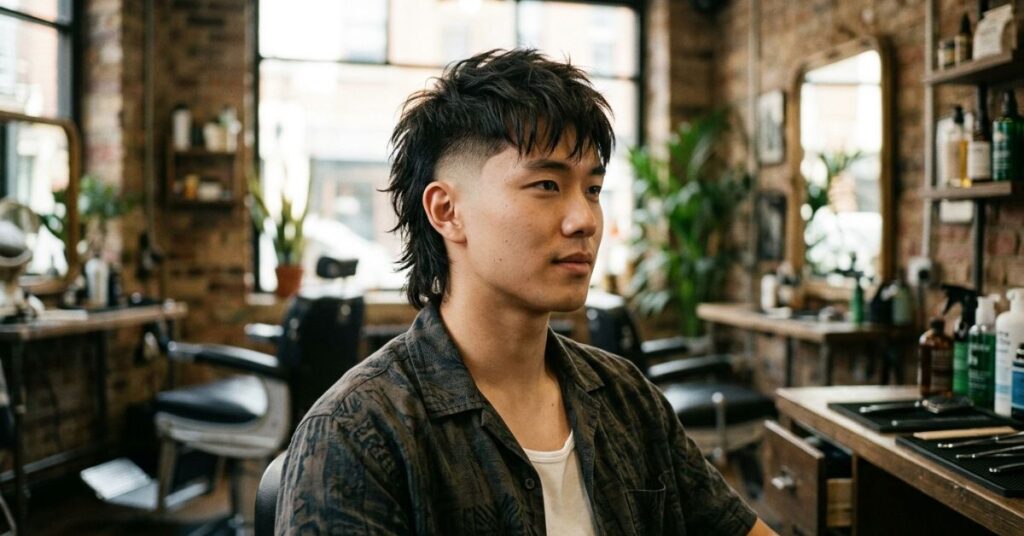
The burst fade mullet combines tightly faded sides with noticeably longer hair at the back. The rounded fade around the ear creates a cleaner transition into the longer rear section.
For a clearly defined mullet, keeping several inches of length at the back usually helps the shape stand out.
Styling tip: Use a lightweight mousse or styling cream to keep the back flowing naturally without making it stiff.
Low Burst Fade Mullet
The low burst fade mullet keeps the fade close to the ear and neckline. This creates a softer transition and works well if you want a modern mullet without an extremely aggressive fade.
Best for: Subtle, everyday styling.
Mid Burst Fade Mullet
The mid burst fade mullet creates more contrast between the sides and the longer back. It offers a balanced appearance and works particularly well with straight and wavy hair.
Best for: Men who want noticeable contrast without going extremely high.
High Burst Fade Mullet
The high burst fade mullet places the fade higher around the ear. The result is a much stronger contrast between the short sides and longer back.
Best for: Bold hairstyles and thicker hair.
Straight Hair Burst Fade Mullet
Straight hair creates a clean, controlled mullet shape. Since straight strands don’t naturally create as much volume as curls, adding texture can help separate the layers.
Styling tip: Use a lightweight texture spray to create movement.
Curly Hair Burst Fade Mullet
Curly hair adds natural volume to the mullet, making the back appear fuller and more dimensional.
Styling tip: Apply curl cream to damp hair and gently scrunch the curls.
2. Low Burst Fade

A low burst fade begins close to the ear and creates a softer overall appearance. It’s one of the easiest versions to wear if you’re new to fades.
The lower placement also tends to grow out more gradually than a high fade.
Styling tip: Use a small amount of lightweight pomade or cream for control.
3. Burst Fade Curly Hair
Curly hair and burst fades make a natural combination. The clean sides emphasize the curls on top while the rounded fade follows the shape around the ear.
Styling tip: Use curl cream and allow the hair to air dry whenever possible.
4. Mid Burst Fade

The mid burst fade sits between the subtle low version and the dramatic high version. It provides a balanced amount of contrast and works with many different top styles.
Styling tip: Blow-dry the top slightly upward if you want additional volume.
5. Burst Fade With Design
A shaved line or simple pattern can turn a standard burst fade into a personalized statement haircut.
Because designs become less visible as the hair grows, they usually require more frequent touch-ups.
Styling tip: Keep the design simple if you want it to remain recognizable as it grows out.
6. Burst Fade Mohawk

The burst fade mohawk keeps a longer strip of hair running through the center while the sides are faded around the ears.
Compared with a traditional shaved mohawk, the burst version can feel more wearable because the transition is blended rather than completely disconnected.
Styling tip: Use a strong-hold product when you want the center section to stand upright.
7. Burst Fade Straight Hair
Straight hair shows the fade transition very clearly. This makes precision particularly important because uneven blending can be easier to notice.
The top can be styled into a quiff, crop, slick back, fringe, or textured finish.
Styling tip: Matte clay works well for adding separation without excessive shine.
8. Taper Burst Fade

A taper burst fade creates a softer finish around the neckline and sideburns while retaining the curved shape around the ear.
It’s a good choice when you want the character of a burst fade without an extremely aggressive appearance.
Styling tip: Keep the top relatively natural for an understated everyday look.
9. High Burst Fade
A high burst fade starts farther above the ear and creates stronger contrast between the sides and top.
It can make curly, textured, and longer hairstyles stand out dramatically.
Styling tip: Keep the top textured to make the contrast look intentional.
10. Burst Fade Buzz Cut

The burst fade buzz cut combines very short hair on top with a curved fade around the ears.
It’s one of the easiest burst fade combinations to maintain because there’s little or no top styling required.
Styling tip: Keep the scalp clean and moisturized instead of relying on heavy styling products.
11. Short Burst Fade
A short burst fade leaves enough length on top to show some texture without creating a demanding styling routine.
It sits between a buzz cut and a longer textured haircut.
Best for: Men who want a simple, low-maintenance style.
12. Burst Fade Textured Fringe
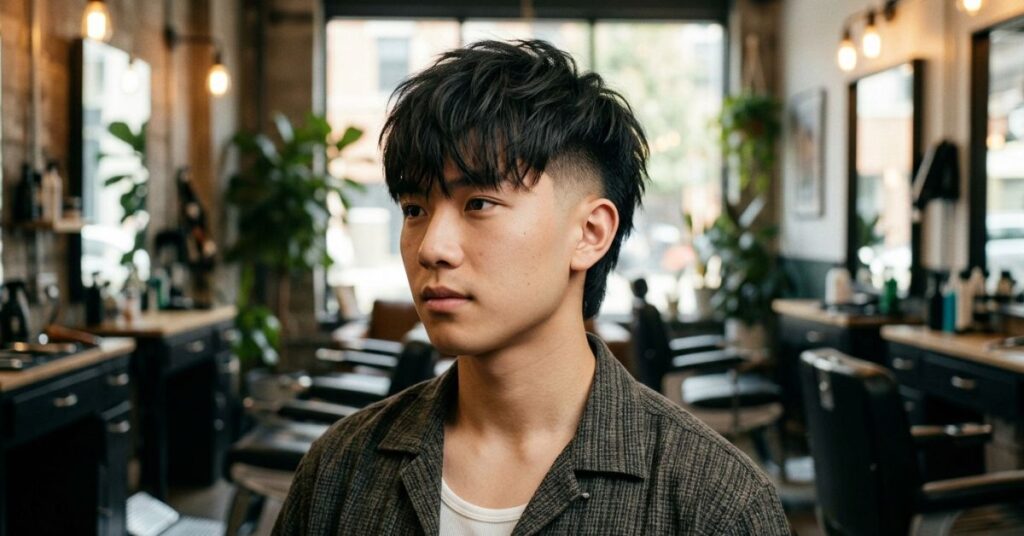
The textured fringe pushes the front hair forward while the sides remain clean and faded.
The contrast between the loose fringe and structured sides gives this style a modern appearance.
Styling tip: Use a small amount of texture spray or matte styling cream.
13. V-Shape Burst Fade
A V-shape burst fade features a pointed neckline at the back rather than a rounded or natural finish.
The sharp neckline can create a more defined rear profile, especially when combined with clean facial hair.
Styling tip: Keep the neckline maintained so the V shape remains visible.
14. Burst Fade Long Hair

The burst fade can also be combined with longer hair on top. The faded area creates structure while the extra length provides plenty of styling options.
You can wear the top loose, pushed back, textured, or tied depending on its length.
Styling tip: Use a lightweight cream to control long hair without making it stiff.
15. Burst Fade Slick Back
The slick-back version pushes the top backward into a smooth and controlled shape.
It creates a stronger contrast between the polished top and faded sides, making it suitable for formal occasions as well as everyday wear.
Styling tip: Use pomade for shine or matte paste for a more modern finish.
16. Comb Over Burst Fade

The comb-over burst fade combines a structured side-swept top with the rounded fade around the ear.
It gives you a more traditional silhouette while retaining the modern character of the burst fade.
Styling tip: Use a light-hold product and comb the top into place.
17. Burst Fade Wavy Hair
Wavy hair gives the burst fade natural movement. The sides stay controlled while the waves provide texture and volume on top.
This combination often requires less styling than completely straight hair.
Styling tip: Apply a lightweight wave cream to damp hair.
18. Textured Burst Fade

A textured burst fade uses a choppy or layered top instead of a smooth finish.
This option is particularly useful for thick hair because texturizing can reduce excess weight while maintaining volume.
Styling tip: Work the product through your hair with your fingers instead of using a comb.
19. French Crop Burst Fade
The French crop combines a short textured top with a forward fringe.
It’s relatively easy to maintain because the front requires little daily shaping.
Styling tip: Keep the fringe short and evenly maintained for a crisp appearance.
20. Burst Fade Back View

The back view highlights the curved fade, neckline, and transition around the ears.
This version isn’t necessarily a separate haircut but rather a way to emphasize how important the rear shape is to a well-executed burst fade.
Styling tip: Ask your barber to check the fade from several angles before finishing.
21. Burst Fade Edgar
The burst fade Edgar combines the rounded fade with a sharp, straight fringe across the forehead.
The result is a high-contrast style with a distinctive front edge.
Styling tip: Use a small amount of strong-hold product to keep the fringe controlled.
22. Burst Fade With Beard
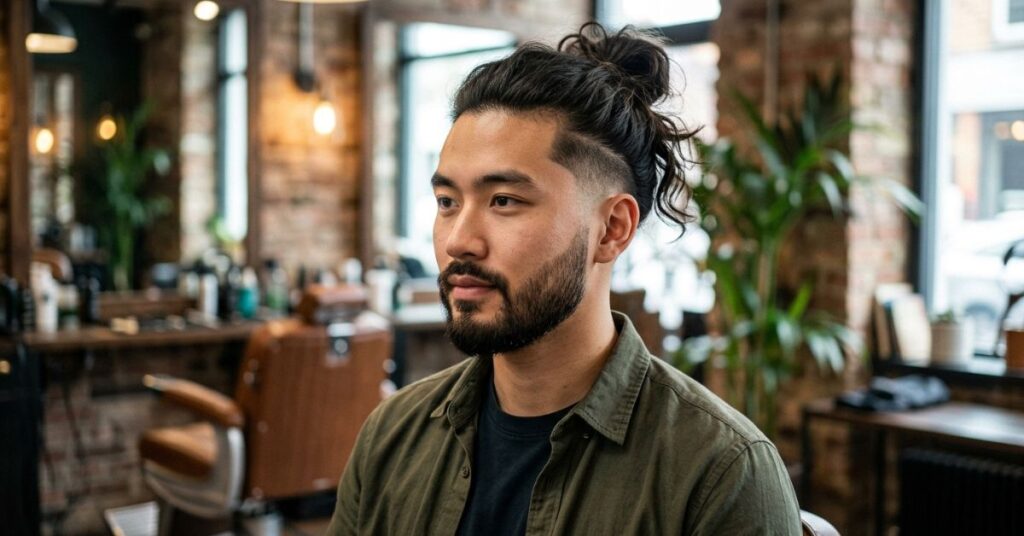
A beard can be blended into the burst fade to create a continuous transition from the sideburn area toward the jaw.
This creates a unified appearance instead of making the haircut and beard look like two separate styles.
Styling tip: Keep the beard transition clean and proportional to the fade.
23. Blowout Burst Fade
The blowout burst fade features volume and lift on top with tightly controlled sides.
It’s ideal if you enjoy a fuller hairstyle and don’t mind spending a few minutes styling it each morning.
Styling tip: Blow-dry the hair upward and slightly away from the face.
24. Burst Fade for Black Men
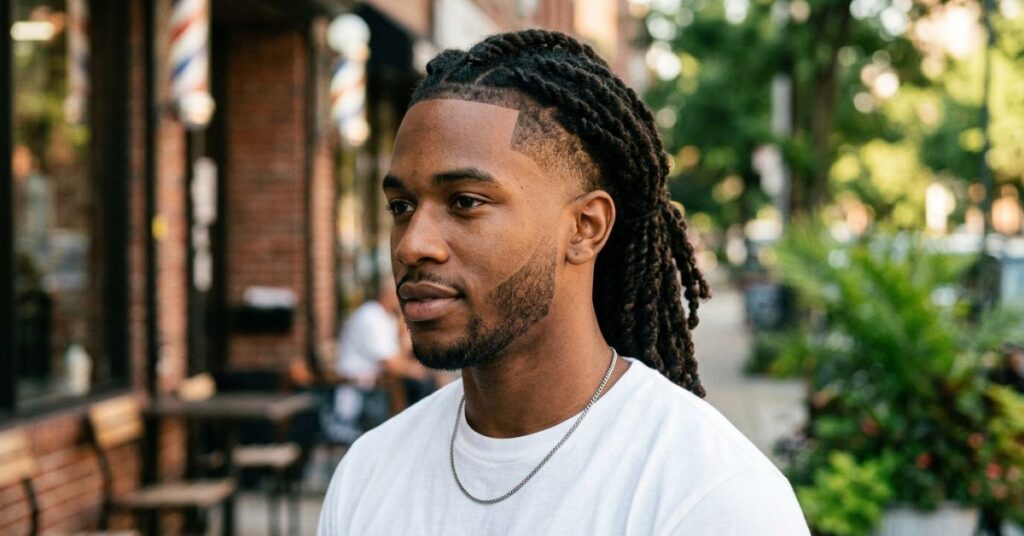
The burst fade works particularly well with afro-textured and coily hair because the natural volume creates strong contrast against the faded sides.
It can be combined with curls, an afro, a mohawk, twists, or a longer textured top.
Styling tip: Keep the hair moisturized and avoid excessive manipulation.
25. Asian Burst Fade
Straight, dense hair can create a very clean burst fade. However, excessive bulk on top may make the haircut appear too heavy.
Strategic texturizing can help create a more balanced shape.
Styling tip: Ask your barber whether removing some weight from the top would improve the overall proportion.
26. Burst Fade Blonde Hair

Blonde or light-colored hair can make the fade transition appear especially noticeable because the contrast between different lengths is easier to see.
This works particularly well with textured tops and modern styling.
Styling tip: Use products designed for your hair color and texture, especially if the hair has been chemically lightened.
27. Burst Fade Afro
The burst fade afro keeps fullness through the upper and rear sections while cleaning up the area around the ears.
The combination creates a strong contrast between natural volume and precise fading.
Styling tip: Use a pick to lift and shape the afro without flattening the texture.
28. Undercut Burst Fade
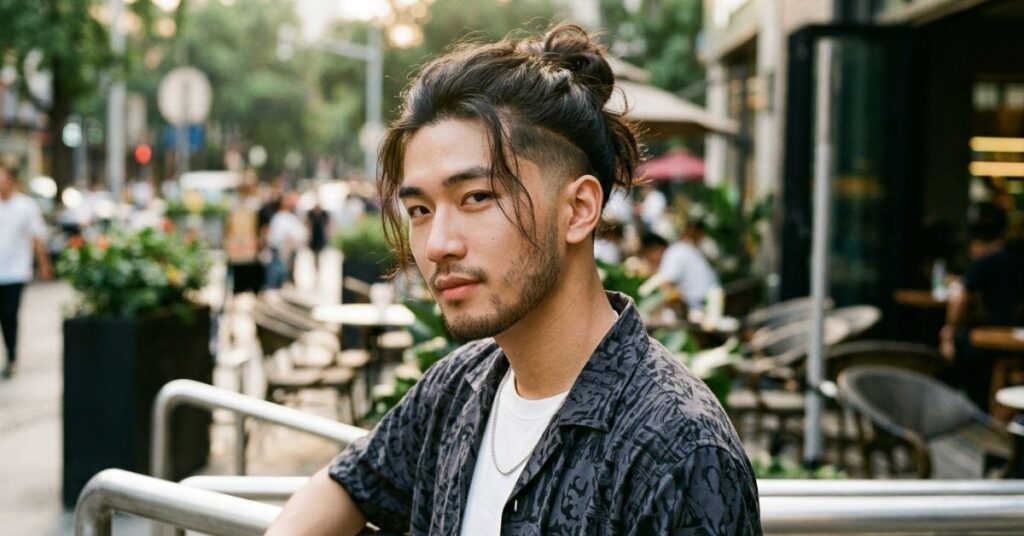
An undercut burst fade creates a pronounced difference between the longer top and closely faded sides.
The dramatic contrast makes the haircut particularly noticeable.
Styling tip: Keep enough length on top so the difference in proportions remains clear.
29. Grown-Out Burst Fade
A grown-out burst fade has softer transitions and less definition than a freshly cut version.
Some men prefer this stage because it creates a relaxed appearance without completely losing the haircut’s original shape.
Styling tip: Keep the neckline and sideburns clean even when allowing the fade to grow.
30. Burst Fade Fluffy Hair

The fluffy version keeps soft, airy volume on top while the sides remain neatly faded.
It’s especially popular with men who prefer movement instead of a slick or heavily structured finish.
Styling tip: Use lightweight mousse instead of heavy wax.
31. Skin Burst Fade
A skin burst fade takes the shortest part of the fade down to bare skin.
This creates maximum contrast and makes the rounded shape around the ear particularly noticeable.
The downside is maintenance. Even a small amount of regrowth can become visible quickly.
Styling tip: Plan more frequent barber visits if you want the skin finish to remain crisp.
32. Drop Burst Fade

The drop burst fade combines the rounded burst shape with a fade that falls lower toward the back of the head.
This creates a more curved silhouette and can help add visual structure around the jaw.
Styling tip: This version works especially well when the top has enough volume to balance the lower fade.
33. Messy Burst Fade
The messy burst fade deliberately contrasts a clean fade with a loose, tousled top.
It’s a good choice if you want your haircut to look styled without appearing overly polished.
Styling tip: Use your fingers to create separation rather than combing everything into place.
34. Burst Fade Pompadour

The burst fade pompadour combines significant height at the front with a clean curved fade around the ears.
It has a classic influence but looks more contemporary because of the modern fade technique.
Styling tip: Blow-dry the front upward and backward before applying styling product.
35. Burst Fade Quiff
The burst fade quiff features a lifted front that’s shorter and more relaxed than a traditional pompadour.
It’s versatile enough for casual and professional settings.
Styling tip: Use matte paste or light hairspray to maintain lift without making the hair look stiff.
How to Choose the Right Barber for a Burst Fade

Not every barber approaches a burst fade in exactly the same way. The curved area around the ear requires careful guideline placement and consistent blending.
Before booking, consider these factors.
Look at Burst Fade Examples
Don’t judge a barber only by their general fade work. Look for examples of actual burst fades, especially versions similar to the one you want.
Check Their Experience With Your Hair Type
A barber who excels at straight hair may not have the same experience with tight curls or coily textures.
Choose someone whose previous work resembles your natural hair.
Pay Attention to the Area Behind the Ear
The curve behind the ear is one of the most important parts of this haircut. A good barber should pay close attention to symmetry and blending in this area.
Read Recent Customer Reviews
Recent feedback can tell you more than an old overall rating. Look for comments about consistency, communication, cleanliness, and whether customers received the style they requested.
Start With a Simpler Version
If you’re visiting a new barber, consider starting with a low or mid burst fade rather than immediately requesting a complicated design or dramatic skin fade.
This gives you a chance to evaluate their technique.
How to Ask Your Barber for a Burst Fade
Simply saying “I want a burst fade” may not be enough.
Different barbers may interpret the height, top length, neckline, and amount of contrast differently.
Bring Reference Photos
Bring two or three photos showing the haircut from different angles.
A front photo shows the top and fringe.
A side photo shows the fade height.
A rear photo shows the neckline and back length.
Choose Your Fade Height
| Fade Type | Starting Point | Best For |
|---|---|---|
| Low Burst Fade | Close to the ear | Subtle appearance |
| Mid Burst Fade | Middle area around the ear | Balanced look |
| High Burst Fade | Higher above the ear | Strong contrast |
Decide the Top Length
Tell your barber whether you want:
- Buzz-cut length
- Short textured hair
- French crop
- Medium-length top
- Quiff
- Pompadour
- Slick back
- Curly top
- Mullet
- Mohawk
- Long hair
Choose the Neckline
A natural neckline grows out more softly and usually requires less maintenance.
A sharp neckline gives a cleaner immediate finish but becomes noticeable as it grows.
Mention Beard Blending
If you have a beard, tell your barber whether you want the haircut blended into the beard or kept separate.
This small detail can significantly change the final appearance.
Discuss Maintenance
Ask how frequently you’ll need a touch-up.
A low burst fade may remain presentable for several weeks, while a skin fade usually needs attention much sooner.
Quick Barber Checklist
| Detail | Options |
|---|---|
| Fade Height | Low, Mid, High |
| Top Style | Mullet, Quiff, Crop, Mohawk, Slick Back |
| Top Length | Short, Medium, Long |
| Beard | Blended or Separate |
| Neckline | Natural or Sharp |
| Finish | Matte, Natural, Shiny |
| Maintenance | 1–2, 2–3, or 3–4 weeks |
Best Burst Fade Haircut by Face Shape
Your face shape can help you choose the right variation, but it shouldn’t be the only factor. Hair texture, density, styling time, and personal preference matter too.
Round Face
Round faces generally benefit from styles that add some height and definition.
Good choices:
- High burst fade
- Burst fade quiff
- Burst fade pompadour
- Burst fade mohawk
- Drop burst fade
Avoid adding excessive width to the sides.
Oval Face
Oval faces are naturally balanced and can handle almost any burst fade.
Good choices:
- Low burst fade
- Mid burst fade
- Curly burst fade
- Mullet
- Slick back
- Quiff
Choose based mainly on your hair texture and personal style.
Square Face
A strong jawline works well with structured hairstyles.
Good choices:
- Mid burst fade
- High burst fade
- Buzz cut
- Textured fringe
- Beard blend
Diamond Face
Diamond-shaped faces are wider around the cheekbones and narrower near the forehead and chin.
Adding controlled volume on top can create better balance.
Good choices:
- Curly burst fade
- Wavy burst fade
- Quiff
- Textured fringe
Heart Face
Heart-shaped faces typically have a wider forehead and narrower chin.
Softer styles can help balance those proportions.
Good choices:
- Low burst fade
- Comb over
- Slick back
- Longer top
Oblong Face
Oblong faces are longer than they are wide, so excessive height can make the face appear even longer.
Good choices:
- Low burst fade
- Mid burst fade
- French crop
- Curly top
Quick Face Shape Guide
| Face Shape | Recommended Styles |
|---|---|
| Round | High, Quiff, Pompadour, Mohawk |
| Oval | Low, Mid, Curly, Mullet, Slick Back |
| Square | Mid, High, Buzz Cut, Textured Fringe |
| Diamond | Curly, Wavy, Quiff, Textured Fringe |
| Heart | Low, Comb Over, Slick Back, Long Hair |
| Oblong | Low, Mid, French Crop, Curly |
Best Burst Fade Haircut by Hair Type
Your natural hair texture has a major effect on how a burst fade looks.
Straight Hair
Straight hair produces sharp, visible lines and works well with structured hairstyles.
Best options:
- Slick back
- Quiff
- Comb over
- Pompadour
- Textured top
Barber tip: Use matte clay or lightweight pomade if your hair needs more structure.
Curly Hair
Curly hair naturally provides volume and movement, making it one of the strongest matches for a burst fade.
Best options:
- Curly burst fade
- Curly mullet
- Mohawk
- Afro
- Curly quiff
Barber tip: Use curl cream or leave-in conditioner to control frizz.
Wavy Hair
Wavy hair creates natural texture without requiring excessive styling.
Best options:
- Wavy burst fade
- Textured burst fade
- Quiff
- Long hair
Barber tip: Sea salt spray can enhance natural movement without making the hair heavy.
Thick Hair
Thick hair provides plenty of volume but can also become difficult to manage.
The burst fade removes bulk from the sides while allowing you to retain fullness on top.
Best options:
- Pompadour
- Mullet
- Blowout
- Textured fringe
- High burst fade
Barber tip: Ask your barber to remove unnecessary bulk through strategic texturizing.
Thin or Fine Hair
Fine hair generally benefits from shorter, lighter styles that don’t become weighed down.
Best options:
- Short burst fade
- Burst fade buzz cut
- French crop
- Low burst fade
Barber tip: Choose lightweight products instead of heavy waxes and gels.
Coily or Afro-Textured Hair
Coily hair naturally creates strong volume and shape.
The burst fade can sharpen the sides while keeping the natural texture visible.
Best options:
- Burst fade afro
- High burst fade
- Burst fade mohawk
- Burst fade with beard
- Curly top
Barber tip: Keep the hair moisturized and avoid excessive combing or manipulation.
Quick Hair Type Guide
| Hair Type | Recommended Burst Fade Styles |
|---|---|
| Straight | Slick Back, Quiff, Comb Over, Pompadour |
| Curly | Curly Burst Fade, Mullet, Mohawk, Afro |
| Wavy | Wavy, Textured, Quiff, Long Hair |
| Thick | Pompadour, Mullet, Blowout, High |
| Fine | Short, Buzz Cut, French Crop, Low |
| Coily | Afro, Mohawk, High, Beard Blend |
Best Burst Fade Haircut by Age
Age doesn’t determine which haircut you can wear. Your hair density, workplace, lifestyle, and personal taste matter more.
Still, certain styles may be more practical at different stages of life.
Kids and Teens
Low and mid burst fades are easy to maintain and don’t require extensive styling.
Younger clients may also enjoy designs, high fades, mullets, and textured tops.
Young Adults
This is a great stage for experimenting with bolder variations.
Mullet burst fades, mohawks, designs, high fades, and textured styles can all work depending on personal taste.
Professionals
A low or mid burst fade paired with a slick back, comb over, French crop, or controlled textured top can provide a polished appearance.
Mature Men
A low burst fade often provides a softer appearance and can work particularly well when hair density begins to change.
However, there’s no strict age limit. If you like a high burst fade and it suits your hair, wear it confidently.
Burst Fade for Receding Hairlines and Thinning Hair
A burst fade can still work if you’re experiencing thinning or recession.
The key is choosing the right proportions.
Consider a Lower Fade
A low or mid burst fade generally creates less contrast around the hairline than a very high skin fade.
Avoid Excessive Length on Top
Longer hair doesn’t always make thinning areas look fuller. In some cases, shorter hair creates a more uniform appearance.
Think About the Hairline
A softer hairline can look more natural than an extremely sharp edge if recession is noticeable.
Consider Crown Density
If thinning is concentrated at the crown, ask your barber to adjust the top length and remove unnecessary bulk without making the area look overly exposed.
Don’t Treat a Haircut as a Hair-Loss Solution
A haircut can change how thinning hair appears, but it doesn’t treat the underlying cause of hair loss. If you’re concerned about significant or sudden hair loss, professional medical advice is more appropriate.
Best Products for Burst Fade Styling
The right product depends on your hairstyle and natural texture.
Pomade
Pomade works well for slick backs, side parts, and pompadours.
It usually provides flexible control and can add shine.
Hair Wax
Wax is useful for textured hairstyles that need separation and medium-to-strong hold.
Hair Spray
Hair spray is useful when you need extra hold, particularly for quiffs and high-volume styles.
Sea Salt Spray
Sea salt spray can add texture and movement to wavy or messy hairstyles.
Hair Clay
Clay is especially useful for thick hair and matte hairstyles.
It provides structure without creating a glossy finish.
Pro Tip
Don’t choose a styling product simply because it’s popular. Match the product to your hair density, texture, and desired finish.
How to Style a Burst Fade Haircut
A good haircut creates the foundation, but styling determines how the finished look comes together.
1. Start With Damp Hair
Wash or lightly dampen your hair before applying most styling products.
Remove excess water with a towel without aggressively rubbing the hair.
2. Choose the Right Product
Use lightweight cream for fine hair, curl cream for curly hair, sea salt spray for waves, and stronger clay or wax for thick hair.
3. Blow-Dry for Volume
If you want a quiff, pompadour, or blowout, direct the airflow upward and backward while shaping the hair with your fingers or a brush.
4. Define Curls Naturally
For curly hair, apply curl cream and gently scrunch the hair.
Avoid repeatedly brushing curls once they’re dry.
5. Finish With Small Amounts of Product
Start with a small amount.
You can always add more, but removing too much product from your hair isn’t nearly as easy.
Barber Tools Used to Create a Burst Fade
A clean burst fade requires several tools and careful technique.
Adjustable Clippers
Clippers with adjustable levers allow a barber to make small changes to cutting length while blending.
Guard Attachments
Different guards create different hair lengths and help build a smooth transition.
Trimmer
A trimmer is used for detailed edging, sideburns, neckline work, and areas around the ear.
Razor
A razor can create an especially crisp finish on the neckline and hairline when appropriate.
Combs
Combs help control longer hair and allow the barber to inspect the blend for uneven areas.
The condition of these tools also matters. Sharp, well-maintained blades produce cleaner results and reduce pulling.
Step-by-Step Burst Fade Haircut Tutorial
A professional burst fade requires practice and precision. The following overview explains the general process.
Step 1: Prepare the Hair
Study the natural growth pattern and comb the hair into its normal direction.
This helps the barber understand how the hair sits around the crown, sides, and ear.
Step 2: Establish the Burst Shape
Create a curved guideline around the ear.
The curve should remain consistent rather than becoming too deep toward the back.
Step 3: Remove Excess Bulk
Use an appropriate clipper guard to remove unnecessary weight while preserving the desired shape.
Step 4: Create the Main Guidelines
Establish the lower and upper sections of the fade.
The exact placement depends on whether you’re creating a low, mid, or high burst fade.
Step 5: Blend the Transition
Gradually move through different clipper lengths to soften the lines between sections.
Use the corners of the clipper carefully around tight areas.
Step 6: Refine the Blend
Look for dark patches, uneven areas, and visible guidelines.
The area behind the ear deserves particular attention.
Step 7: Clean the Edges
Shape the hairline, neckline, and sideburns.
Avoid pushing the natural hairline backward simply to create a sharper edge.
Step 8: Finish and Inspect
Style the top and inspect the haircut from multiple angles.
The final result should have a smooth curved transition around the ear and a balanced overall silhouette.
Burst Fade vs. Other Popular Fade Haircuts
Understanding the differences between fade types makes it easier to explain exactly what you want.
Burst Fade vs. Taper Fade
| Feature | Burst Fade | Taper Fade |
|---|---|---|
| Fade Pattern | Curves around the ear | Gradually shortens sideburns and neckline |
| Contrast | Low to High | Usually Low to Medium |
| Popular Pairings | Mullet, Mohawk, Curls | Side Part, Crew Cut, Classic Styles |
| Maintenance | Usually 2–3 weeks | Often 3–4 weeks |
| Overall Feel | Modern and distinctive | Clean and understated |
Burst Fade vs. Drop Fade
Both use curved shapes, but they aren’t identical.
A burst fade focuses primarily around the ear.
A drop fade continues lower behind the ear and follows the curve toward the back of the head.
| Feature | Burst Fade | Drop Fade |
|---|---|---|
| Shape | Rounded around ear | Drops lower behind ear |
| Appearance | Distinctive and balanced | Curved and dramatic |
| Common Pairings | Mullet, Mohawk, Curls | Quiff, Slick Back, Pompadour |
| Maintenance | Moderate | Moderate |
Burst Fade vs. Skin Fade
A skin fade can be used as part of a burst fade. The main difference is the finish.
A burst fade describes the shape of the fade, while a skin fade describes how short the fade becomes.
| Feature | Burst Fade | Skin Fade |
|---|---|---|
| Main Definition | Curved fade shape | Fade reaches bare skin |
| Contrast | Low to Very High | Very High |
| Common Styles | Mullet, Curls, Mohawk | Buzz Cut, Crop, Pompadour |
| Maintenance | Depends on height | Usually frequent |
Why a Burst Fade Haircut Is Worth Trying
The burst fade stands out because it gives you flexibility.
You can keep the sides subtle or dramatic. You can wear curls, waves, straight hair, a mullet, a mohawk, a crop, or a quiff. You can also adjust the neckline, beard blend, top length, and fade height to create a completely different result.
The key is choosing a version that matches your hair texture, face shape, density, lifestyle, and maintenance routine.
How Much Does a Burst Fade Cost?
The price varies by location, barber experience, shop type, and the complexity of the haircut.
As a general estimate, a standard burst fade may cost around $25–$45 at a mid-range barbershop. Premium barbershops may charge $45–$80 or more, especially for detailed work.
Additional services such as beard blending, shaved designs, coloring, or specialized styling can increase the total.
Remember that the ongoing cost matters too. A skin or high burst fade may require more frequent visits than a low burst fade.
Burst Fade Haircut Glossary
| Term | Meaning |
|---|---|
| Fade | Hair gradually becomes shorter from one section to another |
| Burst Fade | A fade that curves around the ear |
| Blending | Smoothing different hair lengths together |
| Guard | Clipper attachment that controls cutting length |
| Taper | Gradual shortening around areas such as the neckline and sideburns |
| Drop Fade | A fade that drops lower behind the ear |
| Skin Fade | A fade that reaches bare skin |
| Lever | Clipper adjustment used to change cutting length |
| Neckline | The finished edge at the back of the neck |
| Line-Up | Cleaning and defining the hairline |
| Texturizing | Removing weight while preserving overall length |
| Point Cutting | Cutting into the hair at an angle to create texture |
Common Mistakes to Avoid With a Burst Fade
Choosing the Wrong Fade Height
A high burst fade can create significantly more contrast than a low version.
Choose the height based on your desired appearance rather than simply copying a trending haircut.
Waiting Too Long Between Cuts
The curved shape becomes less defined as the hair grows.
Regular maintenance keeps the fade looking intentional.
Using Too Much Product
Heavy styling products can flatten fine hair and make textured hair look greasy.
Start small and add more only when necessary.
Ignoring Your Natural Texture
Straight, wavy, curly, and coily hair behave differently.
Your barber should adjust the haircut and styling approach to your natural texture.
Neglecting the Top
The fade gets most of the attention, but the top determines the overall silhouette.
Make sure the top length and texture complement the fade.
Forgetting Basic Hair Care
Clean hair, regular conditioning, and suitable styling products help the haircut look better between appointments.
Quick Tip
For the best burst fade result, choose the fade height based on your face shape and desired contrast, keep the top compatible with your hair texture, and maintain the cut before the curved area becomes overgrown.
Frequently Asked Questions
What Is a Burst Fade Haircut?
A burst fade is a haircut where the fade curves around the ear instead of moving straight down the side of the head. More length is usually preserved toward the back and crown.
What’s the Difference Between a Burst Fade and a Regular Fade?
A traditional fade usually follows a broader vertical transition along the side of the head. A burst fade concentrates the fade around the ear in a rounded shape.
Is a Burst Fade Good for All Hair Types?
Yes. Burst fades can work with straight, wavy, curly, thick, fine, and coily hair. The best variation depends on your natural texture and density.
How Often Should I Get a Burst Fade Touched Up?
Most burst fades look their best with maintenance every 2–4 weeks. Skin and high fades may need attention sooner, while low versions can usually grow out more gradually.
Can a Burst Fade Be Combined With a Mullet?
Yes. The burst fade mullet is one of the most recognizable combinations because the fade cleans up the sides while preserving length at the back.
How Much Does a Burst Fade Cost?
Pricing depends on the barber, location, shop, and additional services. A basic cut may cost around $25–$45, while premium services can cost considerably more.
Which Burst Fade Is Best for Men?
There isn’t one best version for everyone. Low fades are more subtle, mid fades are versatile, and high fades create stronger contrast.
Is a Burst Fade Professional Enough for an Office?
Yes. A low or mid burst fade with a controlled top can look polished and professional. Avoiding extreme designs and excessive contrast can make the style more workplace-friendly.
Can a Burst Fade Be Combined With a Beard?
Absolutely. A beard can be blended into the sideburn and fade area to create one continuous transition.
Can I Maintain a Burst Fade at Home?
Basic maintenance is possible, but creating the original curved fade is difficult without proper training and equipment. It’s usually better to leave major blending work to a professional barber.
How Long Does It Take to Grow Out a Burst Fade?
The haircut begins losing its original definition as the hair grows. Depending on your hair growth rate and how short the fade was, it may take several weeks to noticeably soften and several months to completely grow out.
Conclusion
The burst fade haircut remains one of the most flexible modern men’s hairstyles because its defining curved shape works with an impressive range of top styles and hair textures.
You can keep things subtle with a low burst fade, create stronger contrast with a high version, or make the haircut more distinctive with a mullet, mohawk, curls, quiff, pompadour, or textured fringe.
The best choice isn’t simply the trendiest version. Your face shape, hair texture, density, preferred top length, workplace, styling routine, and maintenance budget should all influence the decision.
Before your next appointment, save a few reference photos and tell your barber exactly how high you want the fade, how much length you want to keep, what neckline you prefer, and whether you want the beard blended.
That small amount of preparation can make the difference between asking for “a burst fade” and getting the exact haircut you had in mind.

