

A burst fade is a fade haircut where the clipper work curves around the ear in a semicircle instead of running in a straight line down the neck. It works on almost every face shape and hair type, pairs well with mullets, mohawks, quiffs, and afros, and typically needs a touch-up every two to three weeks to stay sharp.
What is a Burst Fade Haircut?

A burst fade is defined by its curved fade line. Instead of fading straight down the side of the head like a traditional taper, the hair “bursts” outward around the ear, creating a rounded, sunburst-like pattern. The top can be left long, short, curly, or straight, while the sides and back blend from skin or a short guard length into that curved shape. This gives the cut a sculpted, three-dimensional look that separates it from a standard taper or skin fade.
Who Should Get a Burst Fade Haircut?
Burst fades suit most men regardless of age, hair density, or texture, which is why barbers recommend it so often. It’s a strong choice if you:
- Want a sharp, modern cut without going fully bald on the sides
- Have curly, wavy, coily, or straight hair and want the style adapted to it
- Prefer versatile styling, since it works with everything from buzz cuts to pompadours
- Are dealing with a receding hairline and want the fade to soften the transition
- Like low to moderate maintenance with regular trims
Why Burst Fade Haircuts Are Trending in 2026
The burst fade keeps climbing search and salon-booking charts because it photographs well, blends cleanly with beards, and adapts to nearly any texture. In 2026, barbers are pairing it more with longer, textured tops like mullets and fringes rather than short, slicked styles, reflecting a broader move toward natural texture over heavy product. Its popularity is also fueled by social media, where the curved line and skin contrast make for a highly shareable, “camera ready” haircut.
Where the Burst Fade Comes From
The burst fade evolved out of classic fade barbering, particularly the high-top and flat-top fades of the late 20th century that also used curved, contoured lines around the ear. Modern barbers refined the technique with clippers capable of tighter blending, turning what was once a niche detail into its own recognized style by the 2010s. It’s now considered a core fade type alongside the taper, skin, and drop fade.
35 Burst Fade Haircut Styles for Men
1: Burst Fade Mullet
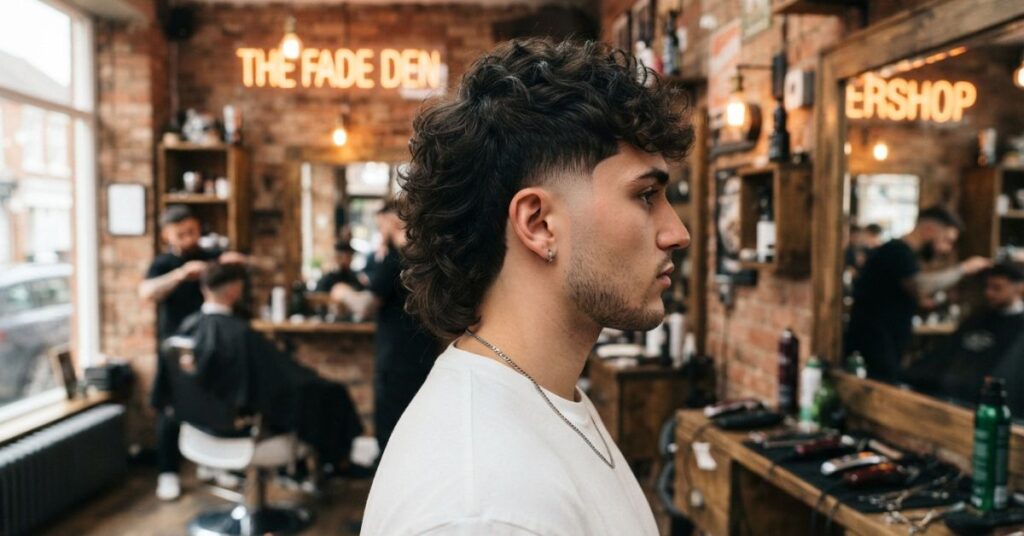
The burst fade mullet combines short, curved sides with longer hair left at the back, giving a retro cut a sharp, modern edge.
Low Burst Fade Mullet
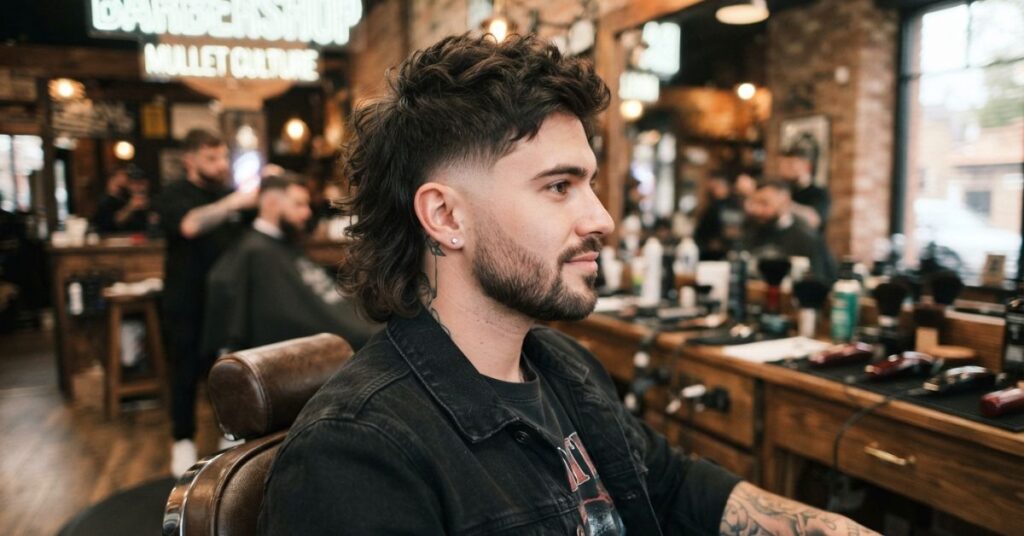
Keeps the fade close to the ear for a subtle, everyday-friendly mullet.
Mid Burst Fade Mullet
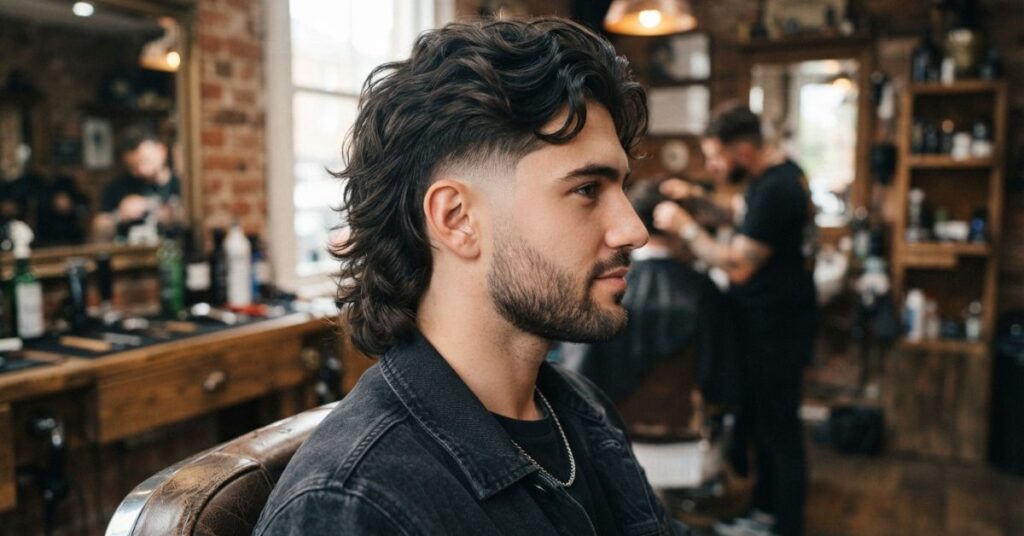
Balances contrast and coverage, the most requested mullet height for most face shapes.
High Burst Fade Mullet

Maximizes contrast with a shorter side length, best for thicker hair that holds volume on top.
Straight Hair Burst Fade Mullet

Straight strands fall cleanly at the back, keeping the mullet sleek rather than shaggy.
Curly Hair Burst Fade Mullet
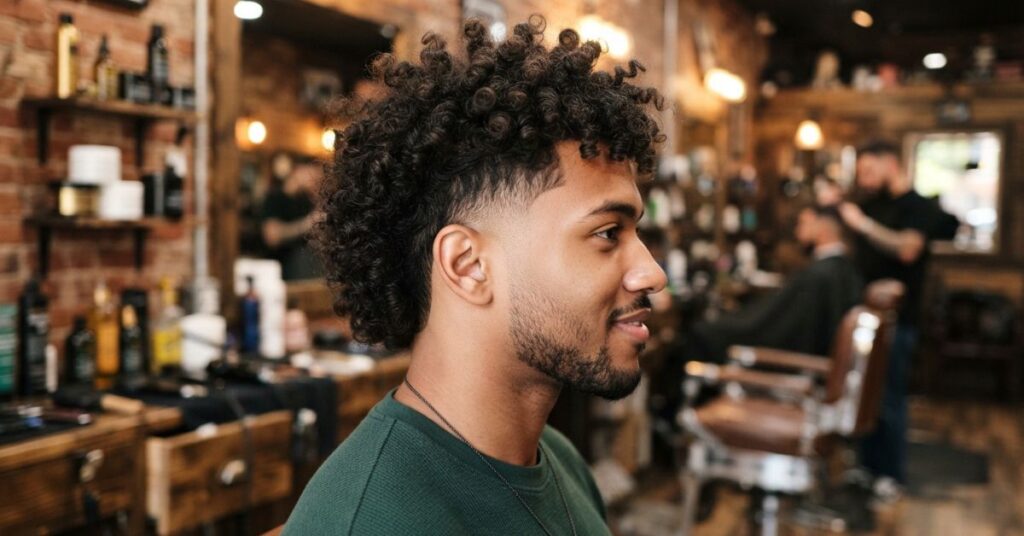
Natural curl adds volume and texture at the back, softening the mullet’s retro edge.
2: Low Burst Fade
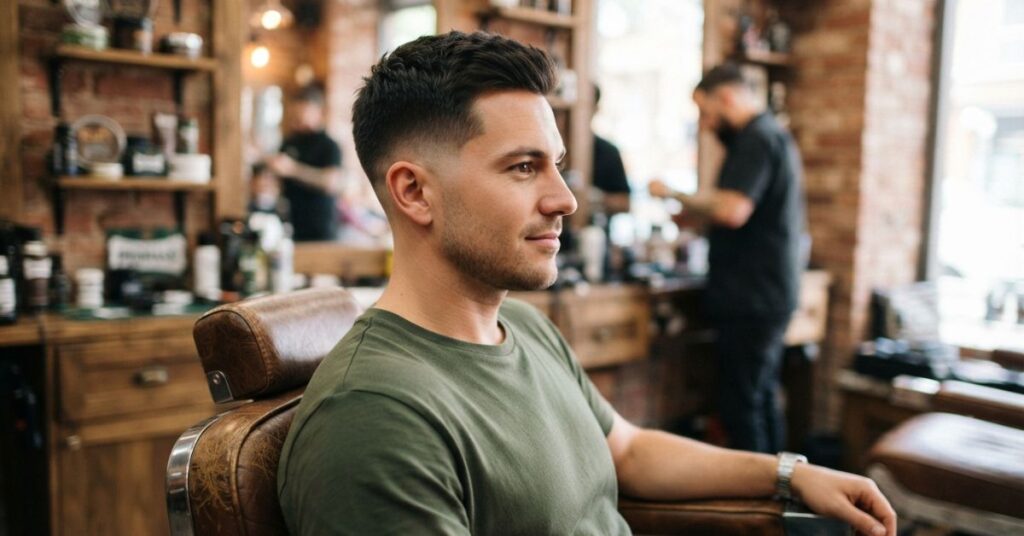
A subtle fade that starts just above the ear, ideal for office settings or first-time fade wearers.
3: Burst Fade Curly Hair
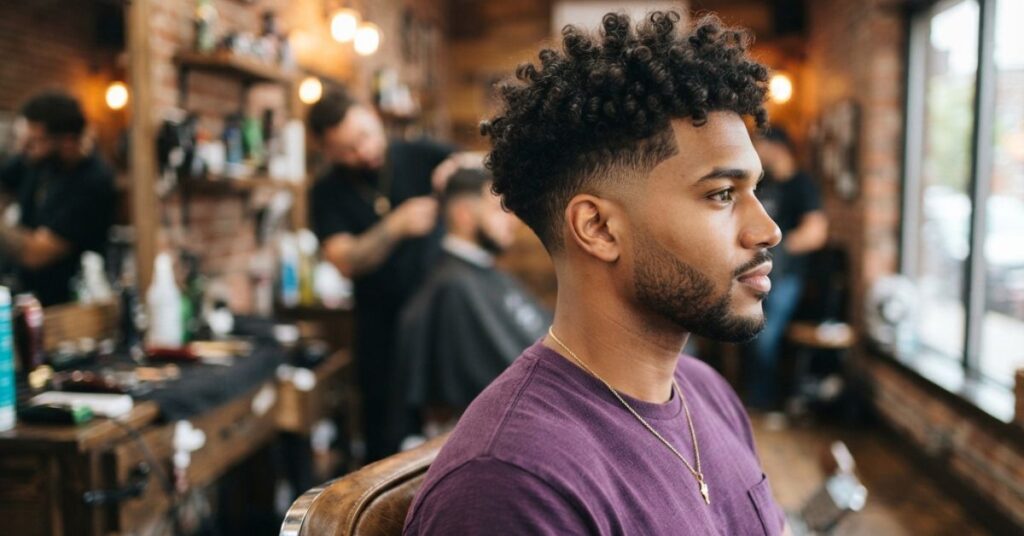
Curls are left longer on top to bounce and contrast against the tightly faded sides.
4: Mid Burst Fade

The most balanced height, offering visible contrast without an overly dramatic look.
5: Burst Fade with Design
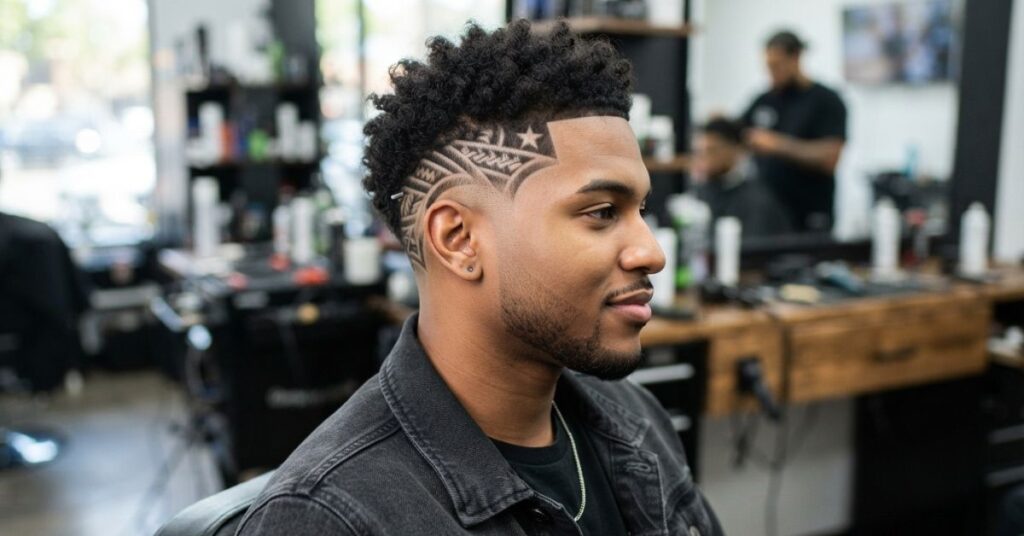
Barbers shave a line, star, or pattern into the fade curve for a custom, statement finish.
6: Burst Fade Mohawk
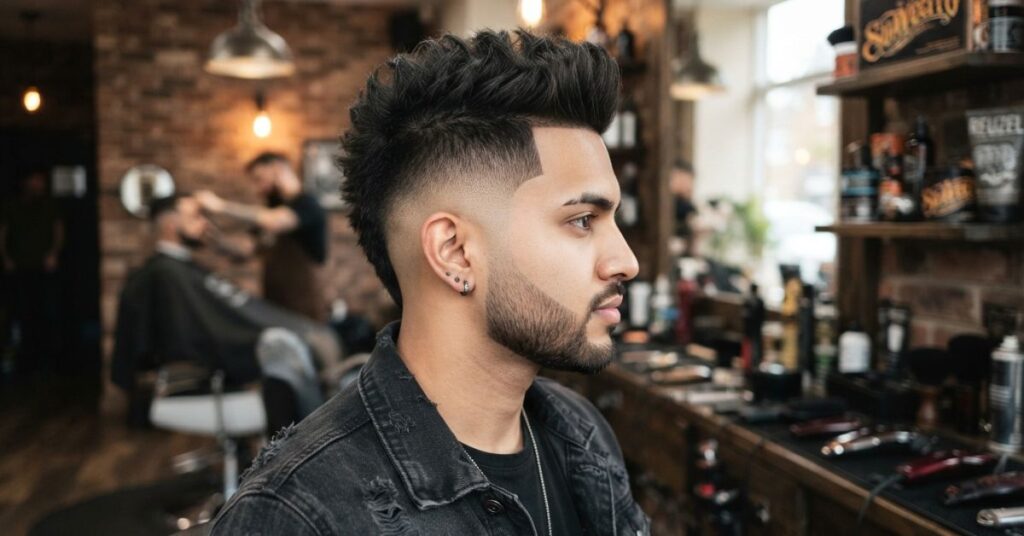
Sides are faded to skin while a strip of longer hair runs from the forehead to the nape.
7: Burst Fade Straight Hair

Clean, defined lines on top pair naturally with the crisp curve of the fade.
8: Taper Burst Fade
Blends a gentler taper on top with the classic burst curve near the ear for a softer transition.
9: High Burst Fade
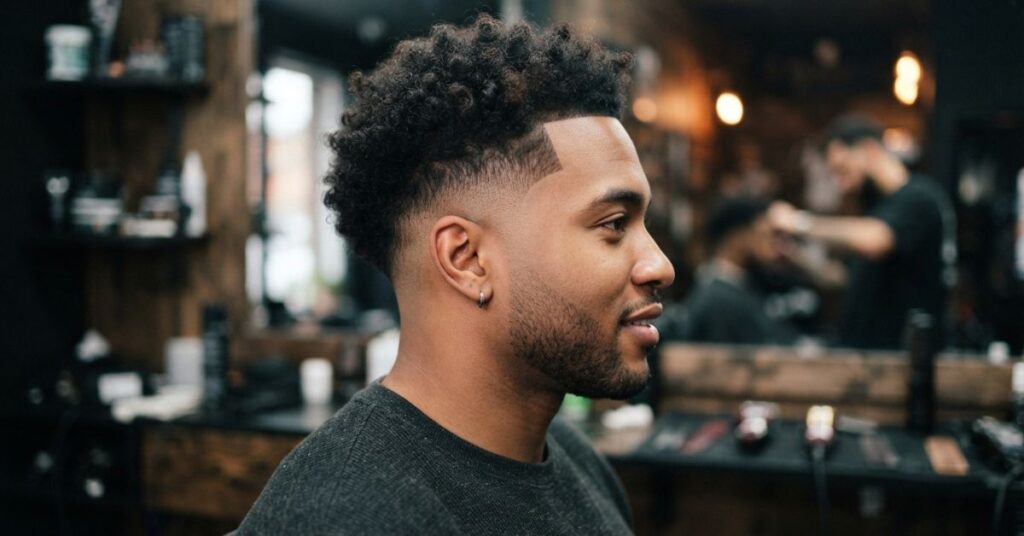
Starts fading near the top of the head for maximum contrast and an edgier finish.
10: Burst Fade Buzz Cut
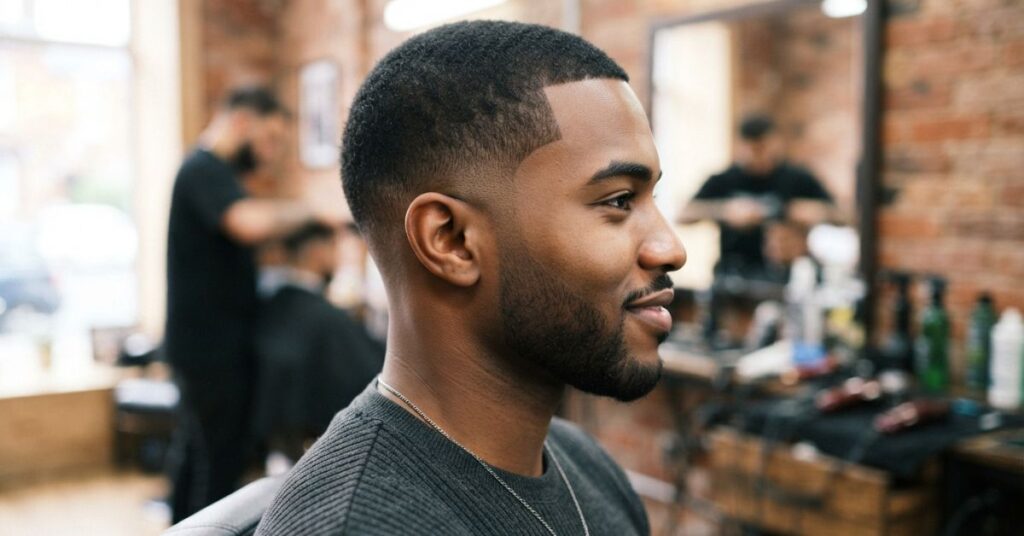
Uniform short length on top meets a sharply curved fade for a low-maintenance, sharp look.
11: Short Burst Fade
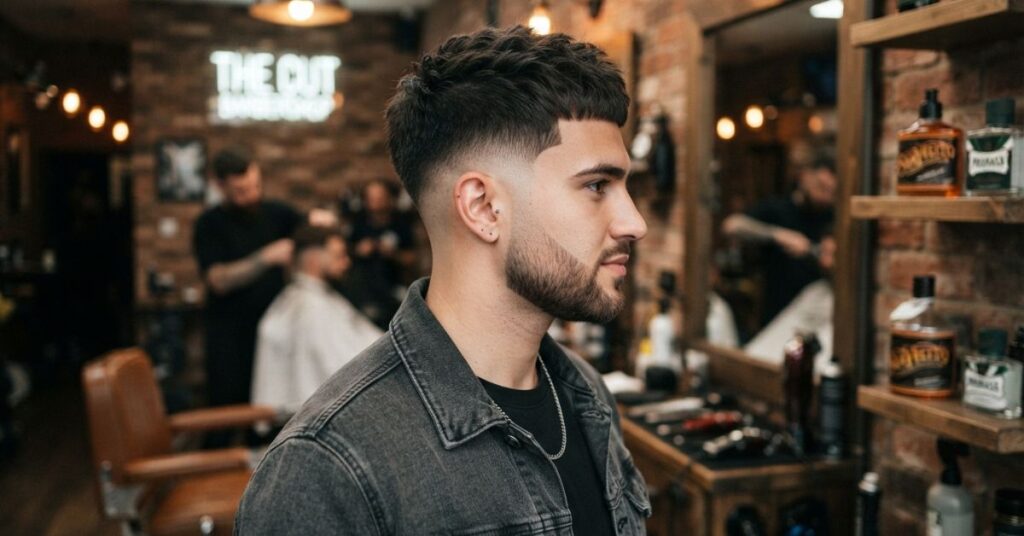
A tight, close-cropped top keeps the whole style neat and easy to manage daily.
12: Burst Fade Textured Fringe
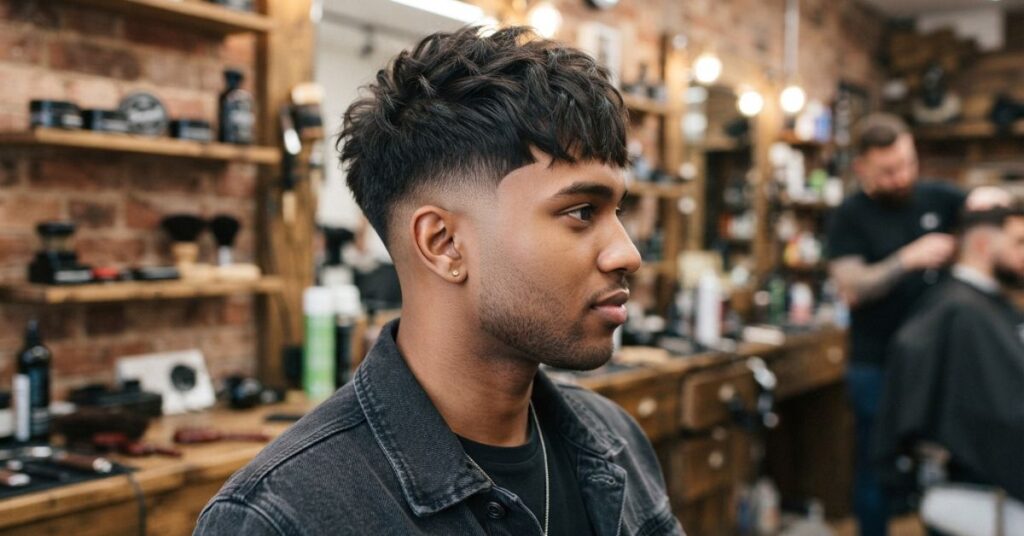
A choppy, textured fringe at the front adds movement and softens the fade’s sharp lines.
13: V Shape Burst Fade
The neckline is cut into a V instead of rounded, adding a distinctive detail at the nape.
14: Burst Fade Long Hair
Longer top lengths create dramatic contrast against the tightly faded sides.
15: Burst Fade Slick Back
Top hair is combed straight back with pomade for a polished, formal-friendly finish.
16: Comb Over Burst Fade
A side part and comb-over top pair with the burst curve for a classic, tidy silhouette.
17: Burst Fade Wavy Hair
Natural waves add texture on top while the curved fade keeps the sides crisp.
18: Textured Burst Fade
Choppy, matte texture on top contrasts with the smooth, precise fade lines below.
19: French Crop Burst Fade
A short fringe pushed forward pairs with the fade for a tidy, low-effort European look.
20: Burst Fade Back View
Refers to how the fade curves and tapers when viewed from behind, a detail worth showing your barber in photos.
21: Burst Fade Edgar
Combines the blunt, straight-across fringe of the Edgar cut with a curved burst fade at the sides.
22: Burst Fade with Beard
The fade blends seamlessly into a faded or lined-up beard for a cohesive, groomed look.
23: Blowout Burst Fade
Top hair is blown out for extra height and volume, paired with a sharp curved fade.
24: Burst Fade for Black Men
Works especially well on coily and afro-textured hair, emphasizing natural volume and curl definition.
25: Asian Burst Fade
Often paired with straight, thick hair styled into a textured fringe or quiff for contrast.
Read More : 25 Best Burst Fade Haircuts for Black Men in 2026
26: Burst Fade Blonde Hair
Lightened or bleached tops make the fade’s contrast even more striking.
27: Burst Fade Afro
Sides are faded tight while a full, rounded afro is preserved on top.
28: Undercut Burst Fade
A disconnected undercut meets the burst curve for extra contrast between top and sides.
29: Grown Out Burst Fade
A softer, less defined fade for those transitioning between trims.
30: Burst Fade Fluffy Hair
Air-dried, voluminous top texture pairs with a clean fade for a relaxed, natural look.
31: Skin Burst Fade
The fade goes all the way down to bare skin for maximum contrast and definition.
32: Drop Burst Fade
Combines the dropping fade line behind the ear with the classic burst curve for extra dimension.
33: Messy Burst Fade
Deliberately tousled, unstyled top hair keeps the look casual despite the sharp fade.
34: Burst Fade Pompadour
A voluminous, swept-back pompadour on top contrasts dramatically with the tight, curved sides.
35: Burst Fade Quiff
Short, upward-styled front hair pairs with the burst fade for a modern, low-maintenance finish.
How to Choose the Right Barber for a Burst Fade
Not every barber is comfortable with the curved blending a burst fade requires. Look for:
- A portfolio with actual burst fade photos, not just standard tapers
- Reviews mentioning “fade specialist” or “precision fades”
- Barbers who ask about your hair growth pattern before cutting
- Willingness to freehand clipper work around the ear rather than using only guards
How to Ask Your Barber for a Burst Fade
Bring Reference Photos
Show 2 to 3 images from different angles, including the back, so your barber sees the exact curve and length you want.
Choose Your Fade Height
Decide between low, mid, or high before you sit down, since this changes how dramatic the contrast will be.
Decide the Length on Top
Tell your barber whether you want a buzzed top, a few inches for texture, or longer length for styles like a mullet or quiff.
Specify the Neckline
Ask for a rounded or V-shaped neckline depending on the finish you prefer.
Mention Beard Blending
If you have a beard, ask your barber to blend the fade into it for a seamless look.
Ask About Your Maintenance Schedule
Confirm how often you’ll need trims, usually every 2 to 3 weeks, so the fade doesn’t grow out unevenly.
Quick Barber Checklist
- Fade height (low, mid, high)
- Top length and style
- Neckline shape
- Beard blending, yes or no
- Design or part line, yes or no
Read More : 19 Sharp Burst Fade Undercut Haircuts for Men in 2026
Best Burst Fade Haircut by Face Shape
Round Face
A high burst fade with height on top elongates the face and avoids adding width at the sides.
Oval Face
Almost any burst fade height works well, since oval faces are naturally balanced.
Square Face
A mid to low burst fade with softer top texture balances strong jawlines without adding harsh angles.
Diamond Face
A low to mid fade that avoids extra width at the cheekbones keeps proportions balanced.
Heart Face
Fuller top styles like a burst fade mullet or quiff balance a narrower chin.
Oblong Face
A mid fade with fringe or texture on top shortens the appearance of the face.
Quick Face Shape Guide
- Round: high fade, added height
- Oval: any fade height
- Square: low to mid fade, softer top
- Diamond: low to mid fade
- Heart: fuller top styles
- Oblong: mid fade with fringe
Expert Barber Advice
Barbers generally recommend bringing your face shape and hair goals into the same conversation, since fade height and top length work together to shape your overall proportions rather than in isolation.
Best Burst Fade Haircut by Hair Type
Straight Hair
Holds clean lines well, making styles like a slick back or French crop burst fade easy to maintain.
Curly Hair
Benefits from slightly longer top lengths that let natural curl pattern show without frizzing.
Wavy Hair
Works well with textured, tousled tops that let waves move naturally.
Thick Hair
Can support higher fades and more dramatic top styles like pompadours without looking flat.
Thin or Fine Hair
A lower fade with lighter product avoids overwhelming thinner strands with too much contrast.
Coily or Afro Hair
Pairs naturally with an afro, twist-out, or short curl top, letting the fade highlight texture.
Quick Hair Type Guide
- Straight: slick back, French crop
- Curly: longer curly top
- Wavy: textured, tousled top
- Thick: pompadour, quiff
- Fine: low fade, light product
- Coily: afro or twist top
Best Burst Fade Haircut by Age
Younger men in their teens and twenties often go bolder with high fades, designs, and mohawks. Men in their thirties and forties tend to prefer mid or low fades with classic tops like a taper or comb over for a more polished, professional look. Older men can wear a burst fade too, usually with a lower fade and shorter, low-maintenance top length.
Burst Fade for Receding Hairlines and Thinning Hair
A burst fade is one of the better fade choices for a receding hairline because the curved line draws attention away from the hairline itself. Keeping the top slightly longer and choosing a low to mid fade height softens the contrast between hairline and scalp. Regular trims every 2 to 3 weeks also prevent thinning areas from looking patchy as hair grows out.
Best Products for Burst Fade Styling
- Matte clay or paste for textured, natural finishes
- Pomade for shine and slicked-back styles
- Sea salt spray for wavy or curly texture
- Light hold gel for curly definition without stiffness
- Leave-in conditioner for coily and afro hair types
Pro Tip
Apply product to slightly damp hair for more even distribution and a longer-lasting hold.
How to Style a Burst Fade Haircut?
1. Choose the Right Styling Products for Your Hair Type
Match product weight to your hair density, lighter formulas for fine hair and stronger hold products for thick hair.
2. Blow Dry Technique for a Clean and Voluminous Look
Use a round brush and medium heat, drying against the direction you want the hair to fall for lift at the root.
3. How to Style a Burst Fade with Curly or Wavy Hair
Apply a curl cream or gel to damp hair and let it air dry or diffuse to avoid disrupting the natural pattern.
4. Creating Texture and Definition With Pomade or Wax
Rub a small amount between your palms and work it through dry hair with your fingers for separated, textured pieces.
Barber Tools Used to Create a Burst Fade
- Clippers with multiple guard lengths
- Trimmers for detailing around the ear and neckline
- Straight razor for sharp lines
- Comb and scissors for blending the top
- Talc or neck strip for a clean finish
Step-by-Step Burst Fade Tutorial
Step 1 – Prep the Hair
Wash and comb the hair to remove tangles and see the natural growth pattern clearly.
Step 2 – Create the Burst Shape
Use clippers to establish the curved guideline around the ear, marking where the fade will bend.
Step 3 – Debulk the Hair
Remove excess bulk on top with scissors or clippers over comb to prepare for blending.
Step 4 – Set the Fade Lines
Cut clear guide lines at each guard length to map out the fade’s progression.
Step 5 – Blend the Fade
Use a lighter hand and shorter, overlapping strokes to smooth transitions between guard lengths.
Step 6 – Detail the Fade
Use trimmers to sharpen the curve around the ear and refine any uneven sections.
Step 7 – Clean the Edges
Line up the hairline, sideburns, and neckline with trimmers or a razor for crisp edges.
Step 8 – Final Touch
Style the top with your chosen product and check the fade from multiple angles.
Final Result
A seamless gradient from skin or short guard length into a curved burst line, with the top styled to complement your chosen look.
Read More : 36 Stylish Burst Fade Side Part Haircuts for Men in 2026
Burst Fade Haircut vs. Other Popular Fade Haircuts
Burst Fade vs. Taper Fade
A taper fade runs in a straight line down the side of the head, while a burst fade curves around the ear for a more sculpted look.
Burst Fade vs. Drop Fade
A drop fade dips lower behind the ear before continuing down the neck, while a burst fade curves upward and outward around the ear itself.
Burst Fade vs. Skin Fade
A skin fade refers to how short the fade goes, down to bare skin, and can be combined with either a taper or burst shape.
Why a Burst Fade Haircut Is Worth Trying
It offers a rare mix of bold visual contrast and genuine versatility, adapting to nearly any hair type, face shape, and lifestyle while staying relatively easy to maintain with routine trims.
FAQs
How much does a burst fade haircut cost?
Prices typically range from $25 to $60 depending on your barber’s experience and location.
How often do I need to get a burst fade touched up?
Every 2 to 3 weeks keeps the fade line sharp as hair grows out.
Can I do a burst fade at home?
It’s possible with clippers and practice, but the curved blending is difficult to master, so a barber is recommended for best results.
Does a burst fade work on all hair types?
Yes, it adapts to straight, wavy, curly, and coily hair with adjustments to top length and product.
Is a burst fade the same as a regular fade?
No, a regular taper fade runs in a straight line, while a burst fade curves around the ear.

