

A low burst fade haircut gives you clean sides without taking away too much hair or making the fade look overly aggressive. Instead of traveling straight around the head, the fade curves around the ear and stays relatively low. The result is a rounded, controlled transition that works with short, medium, curly, straight, wavy, and coily hair.
That flexibility is a big reason men keep choosing the low burst fade in 2026. You can pair it with a mullet, textured top, curls, buzz cut, pompadour, fringe, faux hawk, or even longer hair.
The trick is choosing the right version for your hair texture, face shape, and styling routine. This guide covers 25 low burst fade styles, plus barber instructions, styling tips, maintenance advice, products, and common mistakes.
What Is a Low Burst Fade Haircut?
A low burst fade haircut is a fade that creates a curved transition around the ear while keeping the fade relatively low on the side of the head.
The word “burst” describes its rounded shape. The word “low” describes its placement.
Unlike a standard fade that may continue more evenly around the sides and back, a burst fade concentrates the shortest area around the ear. Your barber can preserve more weight toward the crown and back.
This makes it especially useful with:
- Mullets
- Mohawks
- Curly tops
- Textured crops
- Longer hairstyles
- Faux hawks
- Beard combinations
The exact result depends on the fade height, shortest clipper length, top length, hair density, and how much weight your barber leaves behind the ear.
Low Burst Fade vs. High Burst Fade vs. Mid Burst Fade
All three cuts use a curved burst shape. Their biggest difference is how high that curve sits.
| Feature | Low Burst Fade | Mid Burst Fade | High Burst Fade |
|---|---|---|---|
| Placement | Close to the ear | Middle of the side | Higher toward the temple |
| Contrast | Soft | Moderate | Strong |
| Hair preserved | More | Moderate | Less |
| Overall look | Subtle and clean | Balanced | Bold |
| Good for beginners | Yes | Yes | Less subtle |
| Works with mullets | Excellent | Excellent | Good |
Choose a low burst fade if you want a softer transition and more hair left around the upper sides. Pick a mid fade for extra definition or a high burst fade when strong contrast is the goal.
What’s Driving the Low Burst Fade Trend in 2026?
Versatility is the main attraction.
Men no longer have to choose between an extremely short fade and full sides. A low burst fade cleans the area around the ears while preserving enough hair to maintain the overall shape of the hairstyle.
It also works across different textures. Straight hair makes the curved blend easy to see, while curls and coils create natural contrast against the shorter sides.
Another advantage is customization. You can make the cut subtle with a soft taper or dramatic by taking the shortest section down to skin.
Who Should Get a Low Burst Fade Haircut?
A low burst fade is worth considering if you want:
- Clean sides without a high fade
- More length around the crown and back
- A fade that complements curls or waves
- A modern mullet or mohawk
- A haircut that can work in casual and polished settings
- A fade that connects neatly with facial hair
It can also be a comfortable starting point if you’re trying a burst fade for the first time.
However, men wanting maximum skin exposure and extreme contrast may prefer a higher fade.
Pros and Cons of a Low Burst Fade Haircut
| Pros | Cons |
|---|---|
| Works with many hair textures | The curved blend requires barber skill |
| Preserves more hair around the sides | Skin versions need frequent cleanup |
| Pairs with short and long tops | A poor blend can create visible lines |
| Works well with beards | Not as dramatic as a high burst fade |
| Easy to customize | Straight hair can reveal blending mistakes |
| Suitable for many face shapes | Crisp edges require maintenance |
25 Low Burst Fade Haircut Ideas for Men
The fade is only the foundation. Changing the top length, texture, back, fringe, or styling direction can completely change the finished haircut.
1. Classic Low Burst Fade
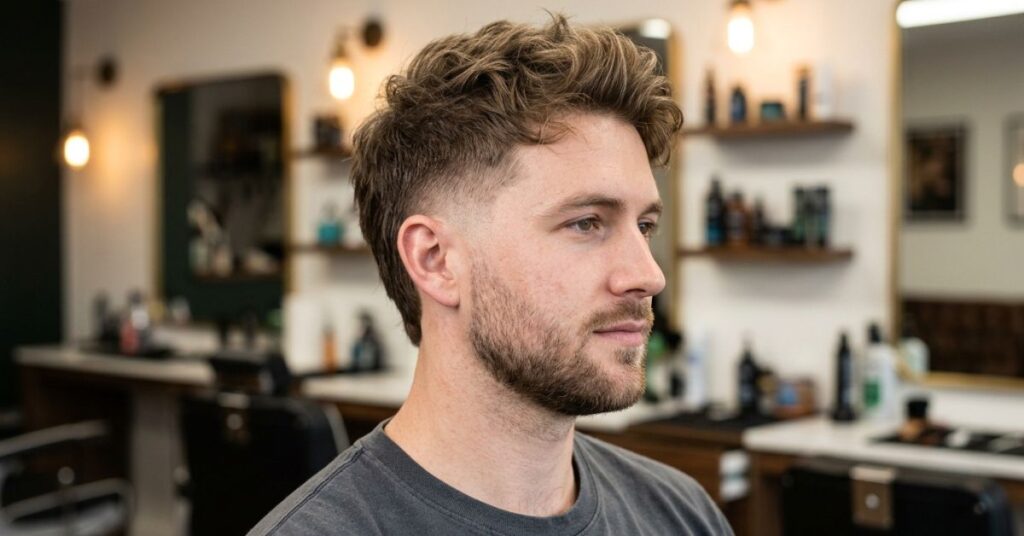
The classic version keeps things simple. A smooth curved fade wraps around the ear while moderate length remains on top.
Choose this style if you want a versatile haircut that doesn’t feel too experimental. A little matte paste can add definition without creating excessive shine.
2. Low Burst Fade Mullet
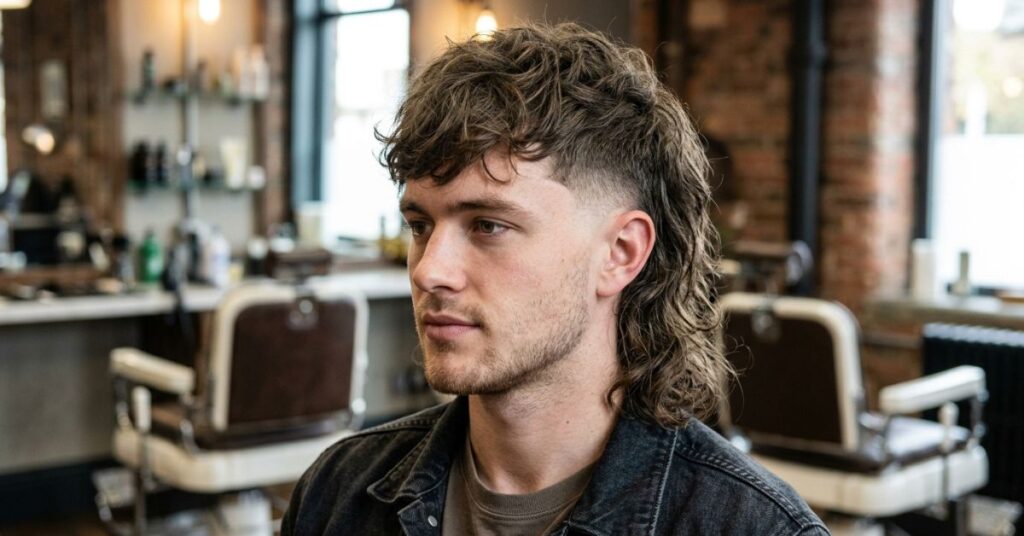
The low burst fade mullet combines tight, curved sides with noticeable length at the back.
Keeping the burst low prevents the sides from overpowering the mullet shape. Ask your barber how much weight should remain behind the ears so the back connects naturally instead of looking disconnected.
3. Curly Low Burst Fade
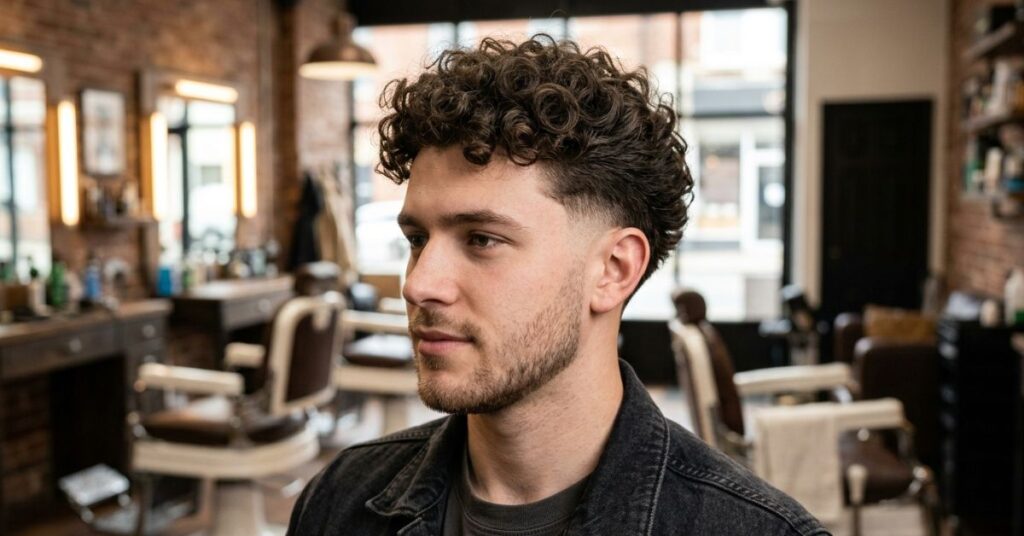
Natural curls create excellent contrast with a clean fade.
Instead of removing too much volume, the barber can shape the curls while cleaning the area around the ears. Curl cream or leave-in conditioner helps maintain definition without making curls crunchy.
4. Straight Hair Low Burst Fade
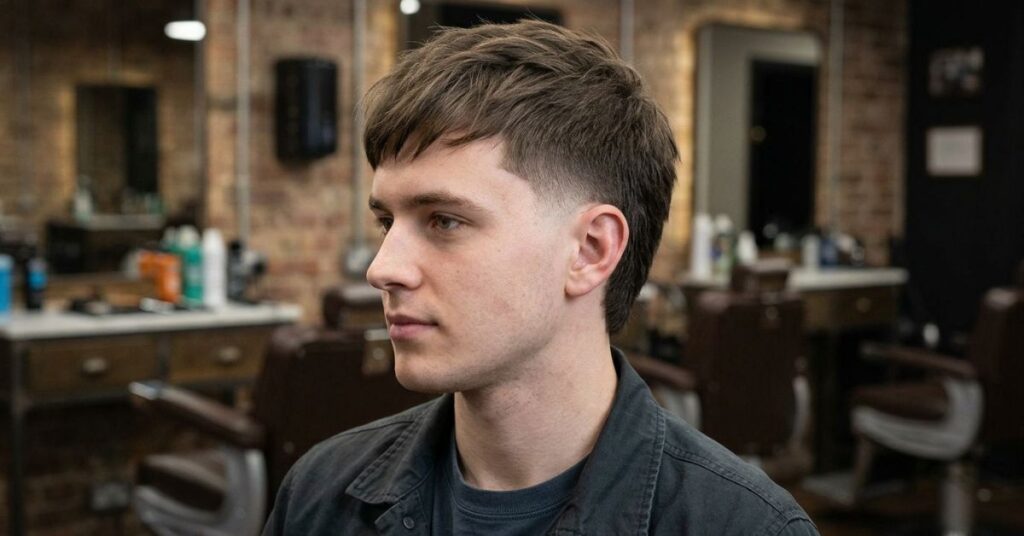
A low burst fade on straight hair can look especially precise because straight strands reveal the outline clearly.
That also means uneven blending is easier to notice. Ask for a gradual transition above the curved guideline and use lightweight clay if you want extra texture.
5. Textured Low Burst Fade
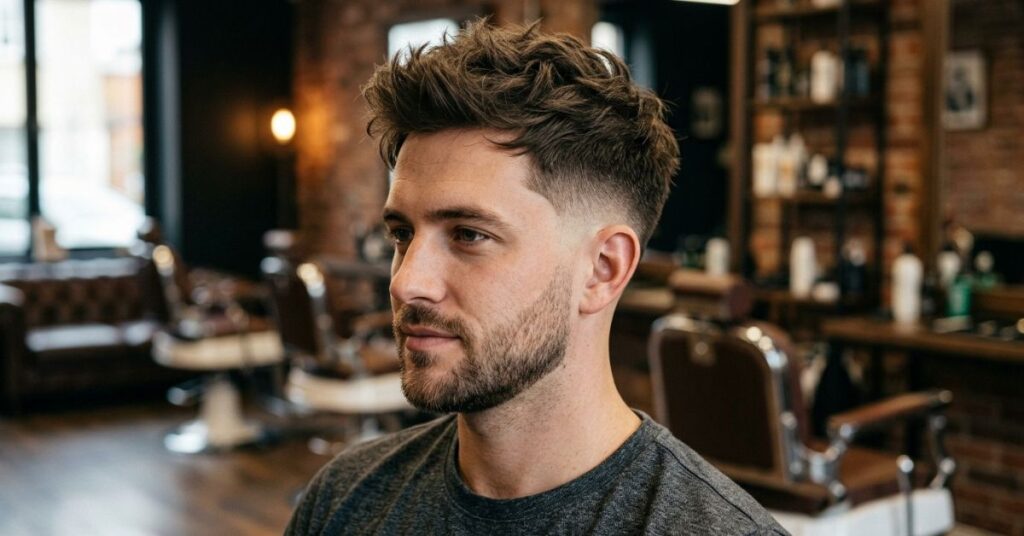
A textured top adds movement while the fade keeps the sides controlled.
This combination works particularly well with thick or straight hair that otherwise sits flat. Use your fingers and a small amount of matte clay to create separation.
6. Short Low Burst Fade
Want minimal morning styling? Keep the top short.
The clean burst shape becomes the main feature while the shorter top reduces styling time. It is practical for active lifestyles and warmer weather.
7. Low Burst Fade with Beard
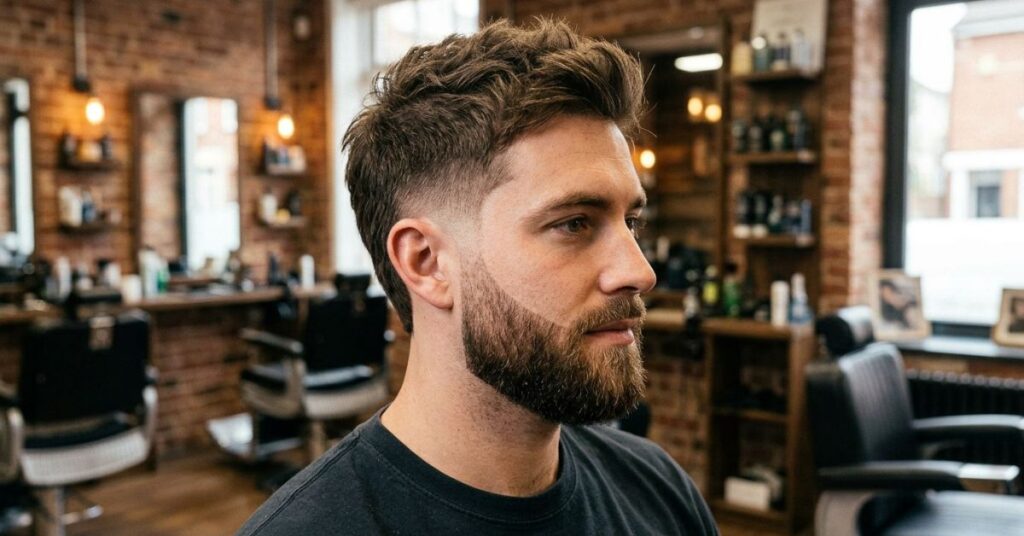
A beard can continue the visual transition from the haircut into the face.
Ask your barber to plan the sideburn and beard blend before cutting. A gradual connection usually looks more natural than treating the haircut and beard as two separate shapes.
8. Messy Low Burst Fade
This style combines intentionally loose texture on top with cleaner sides.
Apply a small amount of matte paste with your fingers rather than combing every strand into position. The goal is controlled texture, not actual bed hair.
9. Low Burst Fade Mohawk
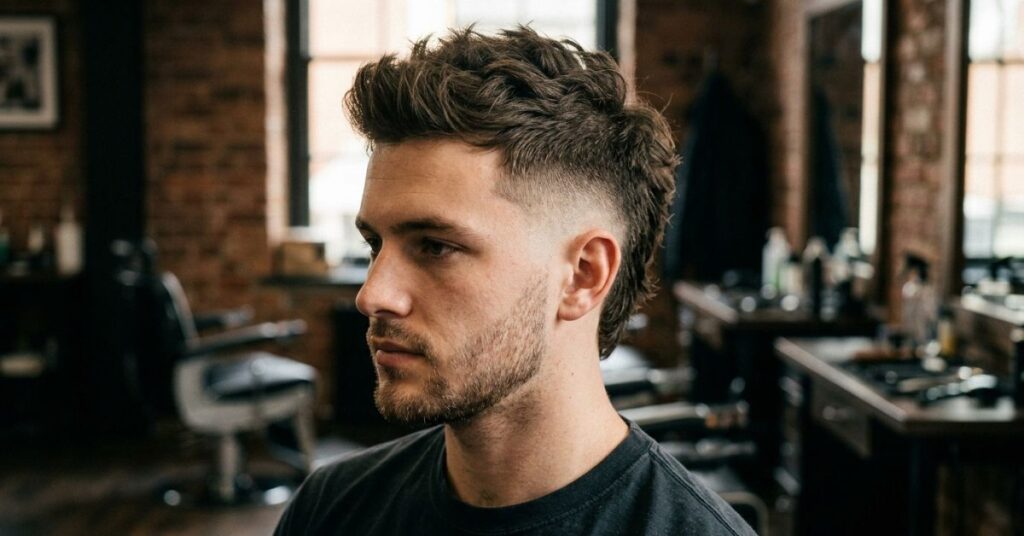
A burst fade naturally complements a mohawk because it can remove hair around the ears while preserving a longer strip through the center and back.
Decide how wide you want the mohawk before your barber starts cutting. That decision changes the entire silhouette.
10. Low Burst Fade with Design
A shaved line or simple pattern can turn the fade into a stronger statement.
Since a low burst provides limited space around the ear, simple designs often remain clearer than extremely complicated patterns.
11. Buzz Cut Low Burst Fade
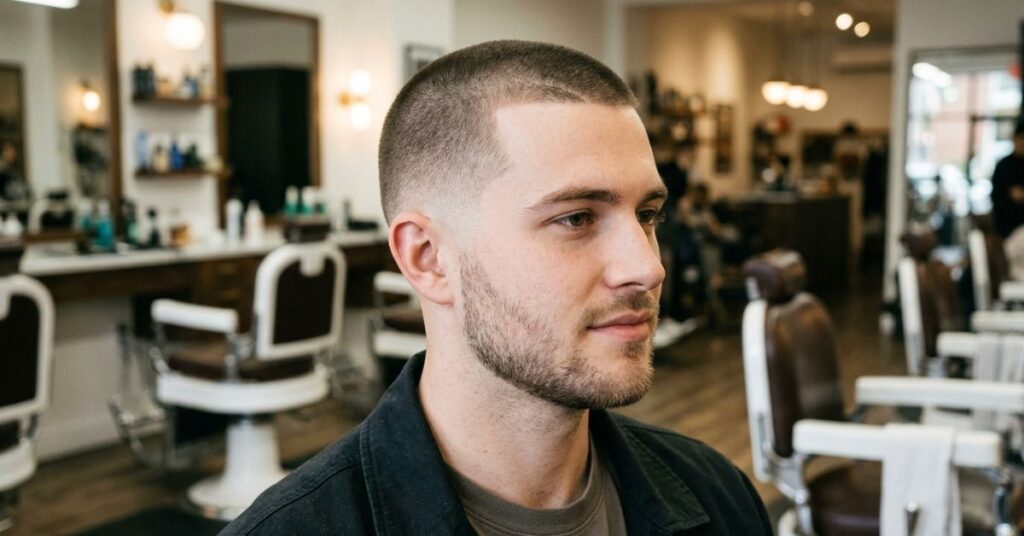
A buzz cut keeps the top short while the curved fade adds detail to an otherwise simple haircut.
Different guard lengths can change the amount of contrast. Discuss your preferred top length instead of simply asking for a “buzz cut.”
12. Low Burst Fade Pompadour
A pompadour adds height at the front while the low burst fade keeps the sides controlled.
Blow dry the front upward and slightly back, then use pomade or styling paste to maintain the shape.
13. Comb Over Low Burst Fade
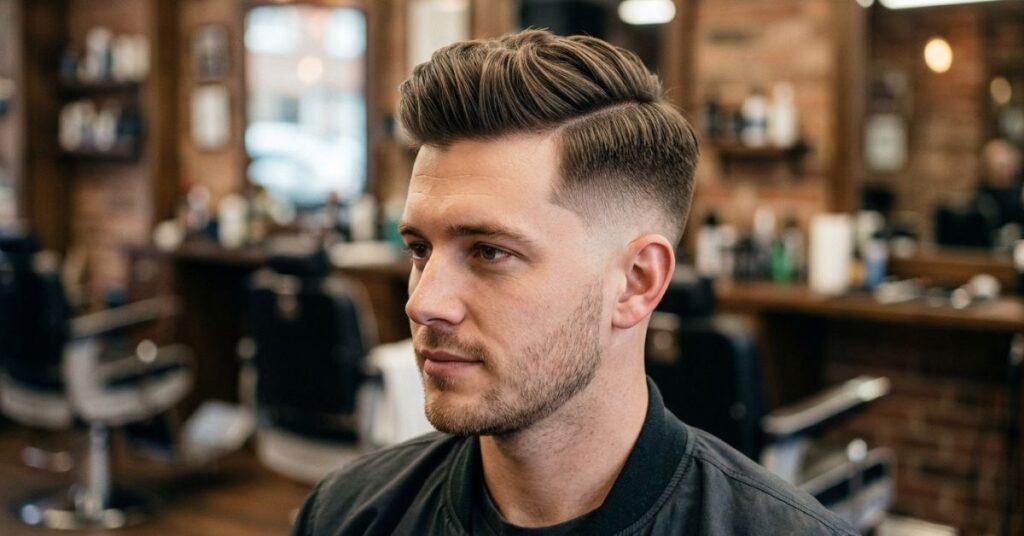
A comb over creates a polished top with a cleaner, contemporary finish around the ears.
Keep enough length for the hair to move across naturally. Medium-hold pomade or cream works well when you want control without a stiff finish.
14. Wavy Hair Low Burst Fade
Natural waves already provide movement, so they need very little help.
The fade removes bulk around the ear while allowing the wave pattern to remain visible above it. A light cream or sea salt spray can enhance definition.
15. Asian Low Burst Fade
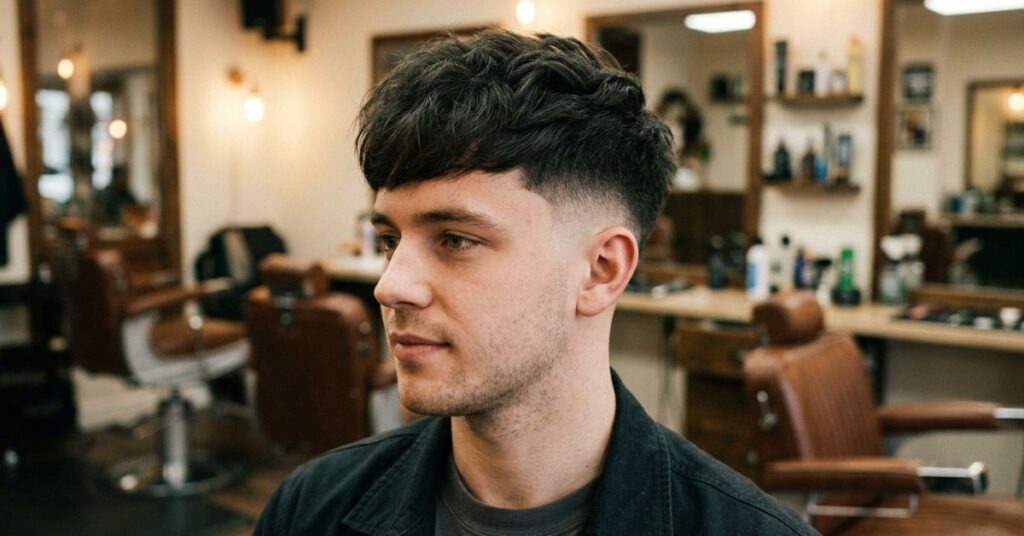
A low burst fade can work particularly well on dense, straight hair that tends to hold noticeable weight around the sides.
The barber should adjust the blend to the individual’s growth direction and density rather than relying on one fixed guard sequence. Lightweight clay can provide control without flattening the top.
16. Low Burst Fade for Black Men
A low burst fade works beautifully with coily and tightly curled textures because it creates a defined perimeter while preserving texture above.
It can complement coils, twists, short curls, an afro-inspired top, or a shaped mohawk. Moisture is important, so use products suited to your individual curl pattern.
17. Slick Back Low Burst Fade
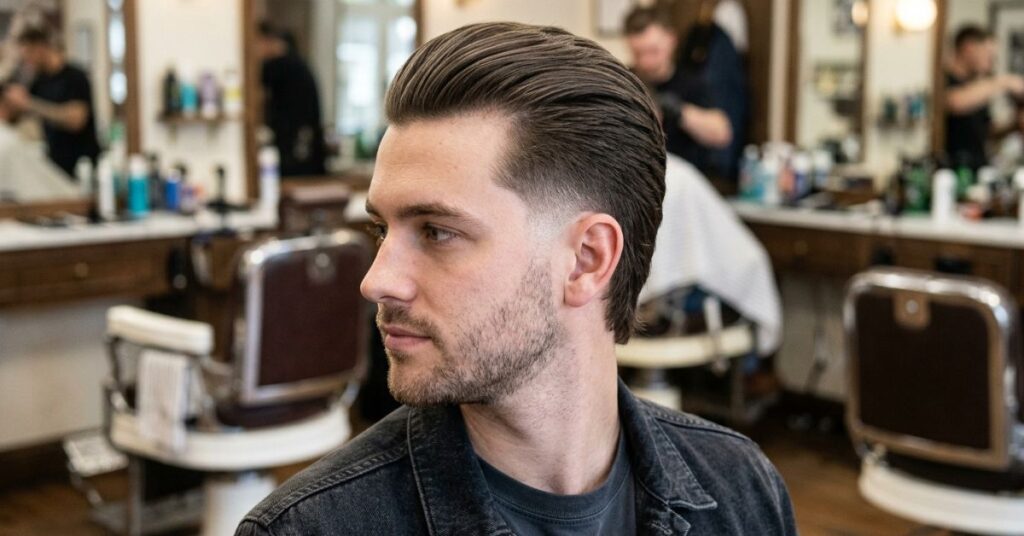
Leave medium or longer hair on top and brush it backward for a cleaner finish.
The low fade removes distracting bulk near the ears while allowing the slicked-back top to remain the focal point.
18. Low Burst Fade Fringe
Keeping extra length at the front creates a fringe that can fall forward naturally.
Straight and wavy hair work especially well here. Ask for texture through the fringe if you want movement instead of a heavy block of hair.
19. Spiky Hair Low Burst Fade
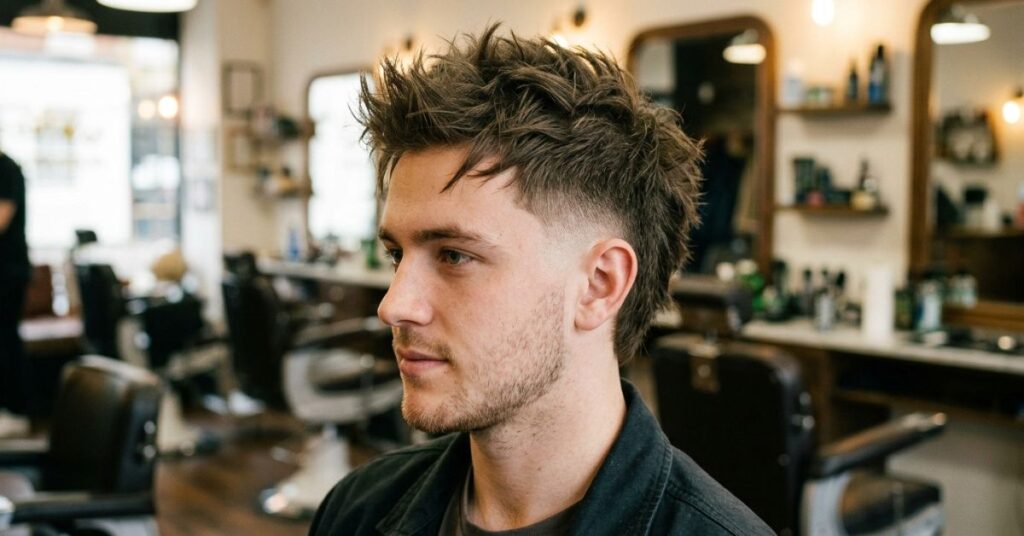
Short spikes create height and definition above the rounded fade.
Use paste or wax sparingly. Too much product can make the spikes clump together and look greasy.
20. Undercut Low Burst Fade
An undercut creates stronger separation between the longer top and shorter sides.
Adding a low burst softens the area around the ear while preserving that dramatic difference in length.
21. Long Hair Low Burst Fade
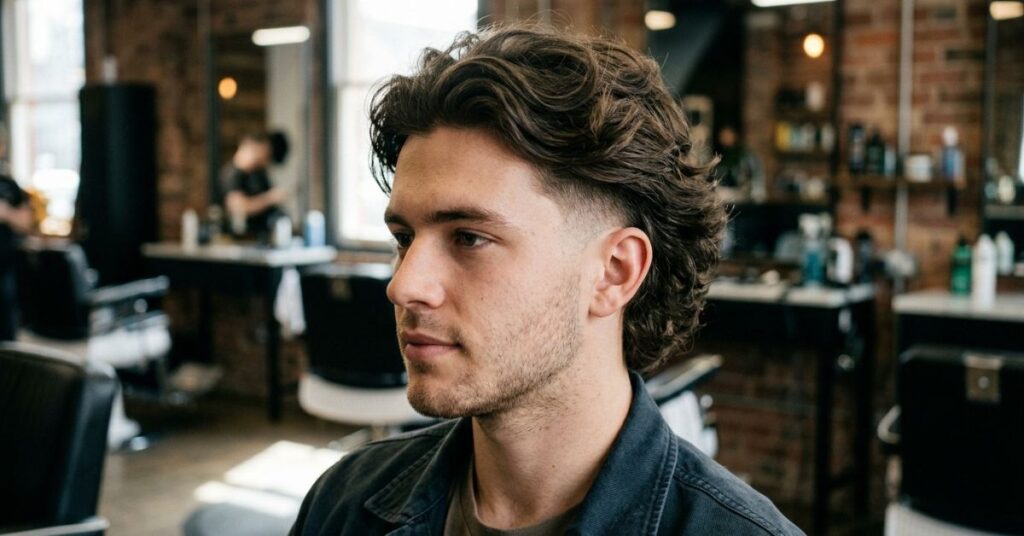
You don’t need short hair on top to wear a burst fade.
Keeping several inches of length creates strong contrast between the clean ear area and flowing top. It can work with pushed-back, textured, wavy, or loose hairstyles.
22. Tapered Low Burst Fade
Want something more subtle? Ask for a softer taper-inspired finish.
The barber leaves more darkness through the transition instead of taking the fade extremely short. This is a good option when you prefer understated grooming.
23. Low Burst Fade Faux Hawk
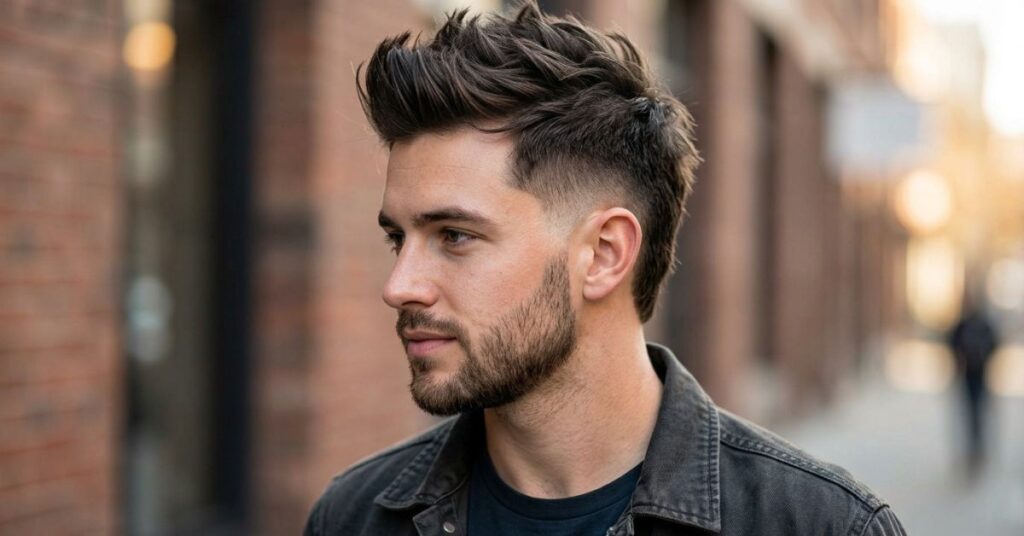
The faux hawk adds height through the center without requiring the extreme separation of a traditional mohawk.
Use matte paste to direct the top inward and upward while keeping the finish flexible.
24. Low Burst Fade with Line Up
A line up creates crisp edges around the front hairline and temples.
Combined with the rounded burst, those sharper lines can give the haircut more structure. Ask your barber to follow your natural hairline rather than pushing it unnecessarily far back.
25. Skin Low Burst Fade
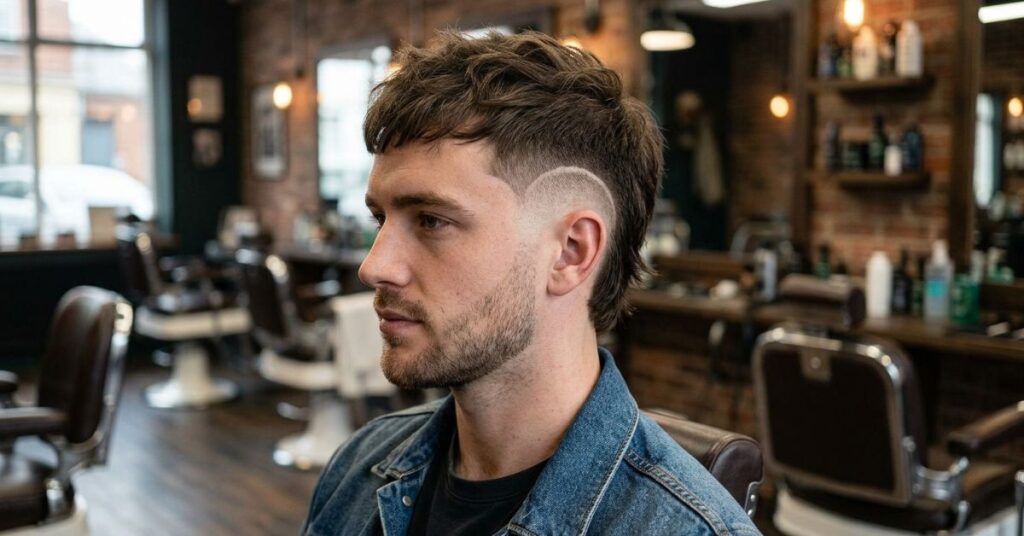
The skin low burst fade takes the shortest section down to bare or near-bare skin.
It produces stronger contrast than a softer low burst. The trade-off is maintenance because new growth becomes noticeable faster.
Best Face Shapes for a Low Burst Fade Haircut
The fade itself is adaptable. What matters more is how you style the hair above it.
Oval Face Shape
Oval faces can handle most variations. Try a classic fade, textured top, fringe, curls, or comb over.
Round Face Shape
Add height rather than excessive width. A pompadour, faux hawk, or textured top can create a longer visual profile.
Square Face Shape
Square faces pair nicely with textured tops, slick backs, and short cuts. The clean sides can emphasize an already defined jawline.
Diamond Face Shape
Keep some volume on top without making the sides excessively narrow. Waves, curls, and textured styles can create useful balance.
Heart Face Shape
Moderate top volume usually works better than extreme height. A messy top, fringe, or classic low burst can keep the overall shape balanced.
How to Ask Your Barber for a Low Burst Fade Haircut
Don’t rely on the phrase “burst fade” alone.
Tell your barber:
“I want a low burst fade that stays close to the ear and curves around it. Keep the fade low and preserve some weight behind the ear. I want [your preferred length] on top.”
Then discuss:
- How short you want the lowest section
- How high the curved fade should travel
- How much length to keep on top
- Whether you want skin exposed
- What should happen at the back
- Whether your beard should connect to the fade
- Whether you want a line up
Bring a reference photo whenever possible. Guard numbers can help communicate length, but clipper systems and cutting techniques differ, so a photo plus a clear description is safer than relying on a number alone.
How to Style a Low Burst Fade Haircut
Your fade doesn’t require much styling. Most of the work involves the hair on top.
Step 1: Start with Clean Hair
Wash your hair according to its texture and scalp needs. Towel dry gently until the hair is damp rather than dripping wet.
Step 2: Apply the Right Product
Choose your product according to the desired finish. Clay gives texture, pomade creates control, curl cream defines curls, and sea salt spray adds light movement.
Step 3: Shape Your Hair
Use your fingers for loose texture or a comb for a cleaner finish. Start near the roots and work outward.
Step 4: Add Volume if Needed
Use a blow dryer at a comfortable heat setting while lifting the roots. This works particularly well for pompadours, faux hawks, and textured tops.
Step 5: Finish and Hold
Add only as much finishing product as needed. Overloading your hair can remove volume and make the top look heavy.
Step-by-Step Low Burst Fade Haircut Tutorial
A professional barber can adjust these stages according to hair density, head shape, and the requested finish.
Step 1: Prepare the Hair
The barber examines hair growth, density, cowlicks, and the desired top and back length before creating the fade.
Step 2: Create the Burst Fade Shape
A curved guideline is established around the ear. Keeping this guideline low is what separates a low burst from higher variations.
Step 3: Blend the Fade
The barber gradually removes visible lines between shorter and longer sections using appropriate clipper lengths and blending techniques.
Step 4: Cut and Style the Top
The top is shaped according to the chosen style, whether that’s a crop, curls, fringe, pompadour, mullet, or longer finish.
Step 5: Clean the Edges
Hair around the ears, sideburns, and neckline is refined. Any requested beard transition or line up is also completed.
Step 6: Finish with Styling Products
The barber styles the top so you can see how the finished haircut should sit and how to recreate it at home.
How to Maintain a Low Burst Fade Haircut
A skin-level fade may need attention sooner than a softer version. Many men refresh the haircut roughly every 2 to 4 weeks, depending on hair growth and how crisp they want the curve to remain.
Wash Hair Properly
Use shampoo according to your scalp and hair needs. Avoid unnecessarily harsh washing if your curls or scalp become dry easily.
Use Conditioner
Conditioner can make longer, wavy, curly, and coily hair easier to manage. Concentrate it where your hair needs moisture most.
Apply Styling Products Carefully
Start with a small amount. Fine hair usually needs lighter products, while thick or textured hair may tolerate stronger formulas.
Maintain Beard and Edges
If your beard connects to the fade, keep the sideburn transition tidy. Cleaning up the neckline and facial hair can make the entire haircut look fresher between barber visits.
Low Burst Fade Haircut vs. Taper Fade
These cuts aren’t identical.
| Feature | Low Burst Fade | Taper Fade |
|---|---|---|
| Main shape | Curves around ear | Gradually shortens selected edges |
| Visual effect | More noticeable | Usually subtle |
| Good with mullet | Excellent | Possible |
| Contrast | Low to strong | Usually softer |
| Focus | Rounded ear area | Temples, sideburns and neckline depending on cut |
Choose the burst fade when you want the curved shape around the ear to become part of the haircut’s design. Choose a taper when you want a quieter transition.
Best Hair Products for a Low Burst Fade Haircut
Products should match the hair on top, not the fade itself.
Pomade
Pomade suits comb overs, pompadours, and slick backs. Choose the finish and hold level based on how polished you want your hairstyle.
Hair Clay
Clay works well for messy, spiky, and textured styles. It is especially useful when you prefer a matte appearance.
Sea Salt Spray
Sea salt spray can add movement and light texture to straight or naturally wavy hair. Avoid using too much if your hair already feels dry.
Curl Cream
Curl cream helps enhance curl definition and control frizz. Apply it to damp curls and avoid unnecessarily disturbing the natural pattern.
Hair Wax
Wax provides flexible control for short and medium hairstyles. Start with a small amount and add more only if necessary.
5 Mistakes to Avoid With a Low Burst Fade Haircut
- Not specifying fade height: Saying only “burst fade” leaves the placement open to interpretation. Clearly ask for a low position.
- Ignoring the back: Decide whether you want a mullet, fuller nape, tapered back, or another finish before the barber begins.
- Using the wrong product: Heavy pomade can flatten fine hair, while very dry products may not suit every curl type.
- Waiting too long for a cleanup: Once the curved transition grows out, the defining burst shape becomes harder to see.
- Choosing a style without considering your texture: Bring inspiration, but ask your barber how the look should be adapted to your density, growth pattern, and head shape.
FAQs
What is a low burst fade haircut?
A low burst fade is a haircut with a curved fade concentrated around the ear and positioned relatively low on the side of the head.
Does a low burst fade work with straight hair?
Yes. Straight hair makes the curved fade easy to see, although precise blending is important because uneven transitions can be more noticeable.
Is a low burst fade good for curly hair?
Yes. The clean sides create contrast while allowing natural curls and volume to remain above the fade.
How often should you get a low burst fade?
Around every 2 to 4 weeks works for many men. Skin fades and very crisp finishes usually need earlier touch-ups.
Is a low burst fade professional?
It can be. A subtle low burst with a neat top can look polished, while designs, mohawks, and dramatic mullets create a bolder result.
Does a low burst fade look good with a beard?
Yes. The sideburn can be gradually faded into the beard to create a smooth transition between your haircut and facial hair.
What is the difference between a burst fade and a skin fade?
A burst fade describes the curved shape and placement of the fade. A skin fade describes how short the lowest section becomes, so a burst fade can also be a skin fade.
Is a low burst fade good for a round face?
Yes. Pairing the fade with extra height on top, such as a faux hawk or pompadour, can visually lengthen a round face.
Can you get a low burst fade with long hair?
Yes. Keeping long hair on top while cleaning the area around the ears creates strong contrast without sacrificing overall length.
Can a low burst fade work with a mullet?
Yes. Burst fades pair naturally with mullets because the fade can remain concentrated around the ears while preserving length at the back.
What guard is best for a low burst fade?
There isn’t one universal guard. The right sequence depends on how short you want the fade, your hair density, and whether you want a skin or softer finish.
Is a low burst fade easy to maintain?
Daily styling can be simple, but the curved fade needs periodic barber visits if you want its outline to remain crisp.
What should I tell my barber for a low burst fade?
Ask for a low curved burst around the ear, specify how short you want the bottom, and explain the desired top and back lengths. A reference photo is also helpful.
Is the burst fade still popular in 2026?
Yes. Its ability to work with curls, straight hair, mullets, textured tops, and other men’s hairstyles keeps it relevant in 2026.
Conclusion
The low burst fade haircut earns its versatility by changing the sides without dictating what you must do with the rest of your hair. Keep it subtle with a classic or tapered finish, add texture with curls and waves, or create stronger contrast with a mullet, mohawk, faux hawk, or skin fade.
Your best version depends on more than a trending photo. Consider your hair texture, density, face shape, preferred top length, maintenance schedule, and how much contrast you actually want.
Most importantly, be specific in the barber’s chair. Explain that you want the burst kept low, decide how short the fade should go, and show what you want to happen at the top and back. Those few details can make the difference between a generic fade and a low burst fade that genuinely suits you.

